
Australian pricing and specifications for the Kia EV4 electric mid-size sedan have been revealed ahead of its imminent on-sale date. Priced from $49,990 plus on-road costs, the EV4 sedan undercuts its Tesla Model 3 main rival by $4910. Three models are available and the longest-range version – the mid-spec Earth – is rated at 612km (WLTP) for driving range.
Featuring a 58.3kWh lithium-ion nickel-cobalt-manganese (NCM) battery, the Kia EV4 Air can travel up to 480km on a charge (WLTP). Based on the 400-volt version – not 800V as in the EV6 or EV9 – of the company’s E-GMP electric vehicle platform, it can be charged at up to 135kW for a claimed 10 to 80 per cent charge time of 29 minutes.
The upper-spec Earth and GT-Line use a larger 81.4kWh battery and their claimed 10-80 per cent charge time is 31 minutes. The EV4 range can be AC charged at up to 11kW, while Vehicle-to-Load (V2L) functionality is standard.
The EV4 range in Australia for now uses a 150kW/283Nm front-mounted electric motor giving a claimed 0-100km/h time of 7.4 seconds for the Air and 7.8 seconds for the Earth and GT-Line and a top speed of 170km/h. The recently revealed EV4 GT, with its 215kW dual-motor drivetrain, is under consideration for Australia.
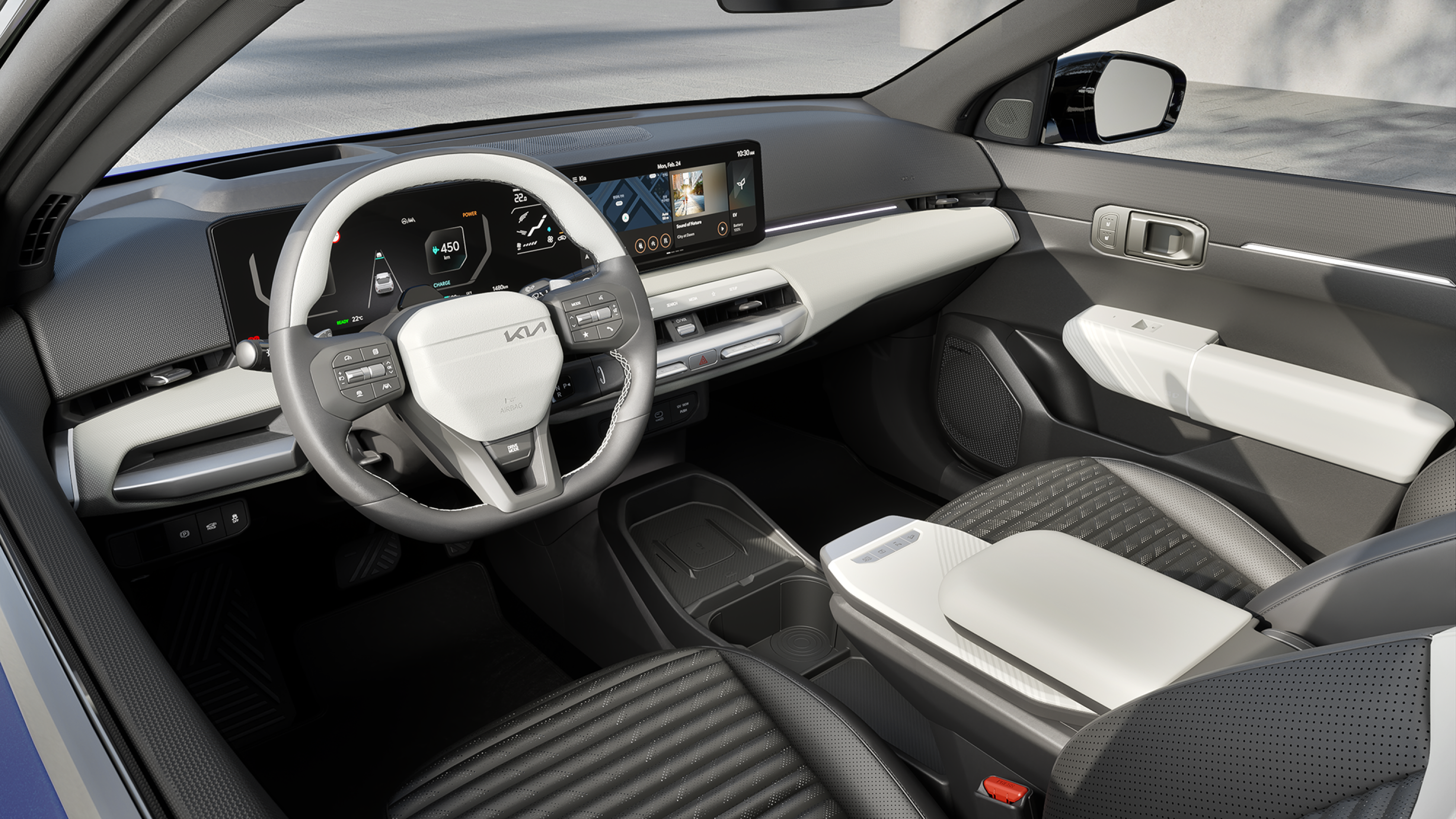
The EV4 sedan measures 4730mm long, 1860mm wide, 1480mm tall and rides on a 2820mm long wheelbase, making it 10mm longer than a Model 3, 10mm wider, 39mm taller and using a 55mm-shorter wheelbase. The EV4 weighs between 1805kg and 1912kg, and its boot measures 490 litres.
Three models are available in the Australian EV4 range: base Air, mid-spec Earth and top-spec GT-Line, with the Air using the smaller battery and the Earth and GT-Line the larger. Even the Air is well equipped with a full suite of active safety features, as well as dual 12.3-inch displays with over-the-air updates and the Kia Connect live services. Scroll down to see a full standard equipment list.
2026 Kia EV4 pricing (plus on-road costs):
| Air Standard Range | $49,990 |
|---|---|
| Earth Long Range | $59,190 |
| GT-Line Long Range | $64,690 |
Kia K4 Air standard features:
- 17-inch alloy wheels with a tyre repair kit
- Automatic dusk-sensing LED lighting
- Automatic rain-sensing wipers
- Keyless entry with push button start and remote start
- Auto-folding/heated mirrors
- Cloth upholstery
- Dual-zone automatic climate control with 5.0-inch touch panel and rear air vents
- Two-spoke synthetic leather steering wheel
- 12.3-inch digital driver’s display
- 12.3-inch touchscreen with live services and over-the-air updates
- Satellite navigation
- Wired and wireless Apple CarPlay and Android Auto
- AM/FM/DAB+ digital radio
- Six-speaker sound system
- 4x USB-C ports
- Vehicle-to-load (V2L) functionality
- Sport, Normal, Eco, Snow and My Drive driving modes
- 7x airbags
- Autonomous emergency braking with car, pedestrian, cyclist, junction turning/crossing and direct/oncoming lane change detection, steering assistance and automatic evasive steering assist
- Lane keeping assistance with adaptive lane guidance
- Adaptive cruise control with stop and go functionality
- Blind-spot monitoring with rear cross-traffic alert (with braking)
- Safe exit warning
- Driver attention monitoring
- Rear occupant alert
- Traffic sign recognition with speed limit alert
- Reversing camera
- Auto high beam
- Front and rear parking sensors
- Burglar alarm
EV4 Earth model adds:
- Long Range 81.4kWh battery
- 19-inch alloy wheels
- Cloth and synthetic leather upholstery
- 10-way electric driver’s seat
- Heated front seats
EV4 GT-Line model adds:
- Sportier GT-Line exterior styling
- Sunroof
- Head-up display
- Electric bootlid
- 10-way electric front passenger seat, driver’s memory
- Ventilated front seats
- Synthetic leather upholstery
- Adaptive auto high beam
- 360-degree camera with blind-spot camera feed
- Safe exit assist
- Rear privacy glass
- Heated three-spoke synthetic leather steering wheel
- Ambient mood lighting
- Wireless phone charger
- Eight-speaker Harman Kardon sound system
- Rear autonomous emergency braking
- Remote parking
Supercars tend not to have much in the way of shelf life.
If your currency is to shock and amaze, then it stands to reason that these attributes fatigue quickly. Problem is, nobody seemed to have informed Lamborghini. The Countach remained in production for 16 years, its introduction at the 1971 Geneva Motor Show was closer to the era of the Ford Model T than it is to today.
Yet even now it has the ability to snap necks as it passes. If anything, its form factor appears even more extreme in a world of bloated, risk-averse designs. The Countach is tiny, considerably shorter than a Toyota 86, its alien blending of flat planes and muscular curves a design language that has been lost to time.
Styling can be contentious. It’s impossible to consider the Countach without first placing the car in some sort of frame of reference, and that frame of reference is called the Miura. This remarkable car established the company’s reputation for outrageous styling. Marcello Gandini claimed credit for the work, but there are many who believe the Miura’s proportions came from Giorgetto Giugiaro’s pen with the young Gandini merely filling in some of the final details for the end result.
The Miura was neither the first supercar – the Mercedes-Benz 300SLR has a better claim there – nor the first mid-engined coupe, with the Matra Djet, the Porsche 904 Carrera GTS and the De Tomaso Vallelunga amongst others already in production before the slinky Lamborghini was unveiled. Nevertheless, the Miura taught a company that had been in business just 29 months a valuable lesson. Extremity sells.
It was also clear to Ferruccio Lamborghini that if the company was to make the next step on from the Miura, it needed to change its processes. Prior to the Countach, Lamborghinis had been built at different locations according to a very well-trodden tradition. External coachbuilders fabricated the bodies, while the technical underpinnings were built in-house at the tiny Sant’Agata Bolognese plant. Carrozzeria Bertone built the Miura body in Turin and Marchesi fabricated the chassis in Modena.
When the original factory was completed in 1966, it measured a mere 12,000 sq m, and featured two production lines. One was dedicated to engines and mechanical components, the other for vehicle final assembly. That changed in October 1968, when Lamborghini built three new factory buildings. Today, the factory is a sprawl of some 346,000 sq m, but the original Countach production line (Linea Montaggio N.1 Countach) is still there, with Revueltos now passing down it.
If the Countach required revolution to build, it also required a seismic shift in design ethos. As Gandini stated in a 2021 interview with Forbes, “The original mechanical setting of the Miura conditioned its shape while with the Countach it was the opposite: the shape conditioned the mechanics. Both were the result of a collaboration and a similar way of thinking between me and the people in charge of the mechanics.”
Chief Engineer Paolo Stanzani oversaw the development of a complex semi-monocoque spaceframe for the first LP500 prototype, developed in secret as the innocuous sounding Project LP112. Created from box-section steel, Stanzani was tasked with righting many of the Miura’s shortcomings in terms of weight distribution, aerodynamic stability and maintenance access. The engine was to be an enlarged version of the Bizzarrini V12, but there’s no evidence that a fully functional five-litre V12 was ever fitted to the car. As a result, the rest of the work progressed quickly. From a project start in early 1970, a Countach LP500 prototype was readied for the Geneva Show in March 1971.
We like to think that the Countach shook the automotive world in Geneva, but many were more than a little sceptical of Lamborghini’s aspirations. Peter Robinson went on to say what many were thinking. “When the first photographs and words about the Countach arrived in our office in 1971 we were, despite the evidence of the Miura to the contrary, convinced the Countach was just another show car,
destined to make a few public appearances before being consigned to the museum as an impractical fantasy,” he recalls. “It was, we felt, too bizarre, too extravagant to be taken seriously.”
That yellow LP500 prototype was subsequently used as a test mule and was crash tested in March 1974 in order to gain type approval. In hindsight, that was a bit naughty of Lamborghini, as the next car to be built, chassis 1120001 – originally red at the 1973 Geneva Motor Show and which is now green and living in the Lamborghini museum – was a very different creature. Marchesi swapped the original’s box-section steel for round tubing which, while more complex to fabricate, was far stronger and cut weight from 107 to 90kg. Bertone fashioned 1.2mm-thick aluminium-alloy body panels rather than steel, further cutting weight from the original show car. This vehicle finessed many of the details to feature on the first production model.
Brake cooling ducts were added to the nose section, while the complicated V-type windscreen wipers were swapped for a simpler single blade. When the team was happy with the development program, the car was sent to Giovanni Raniero’s workshop in Orbassano on the outskirts of Turin, where it was used to create the Elmwood master model for all future production Countach models, fully built in-house at Sant’Agata.
Amazingly, chassis 112001 appeared on, of all things, a Yahoo auction in 2000, having languished in a Swiss barn for years. Test driver Valentino Balboni and engineer Giorgio Gamberini spotted the Rosso overspray peeking out below the Verde paintwork, realised what they were looking at and bought the
oldest surviving Countach for Lamborghini.
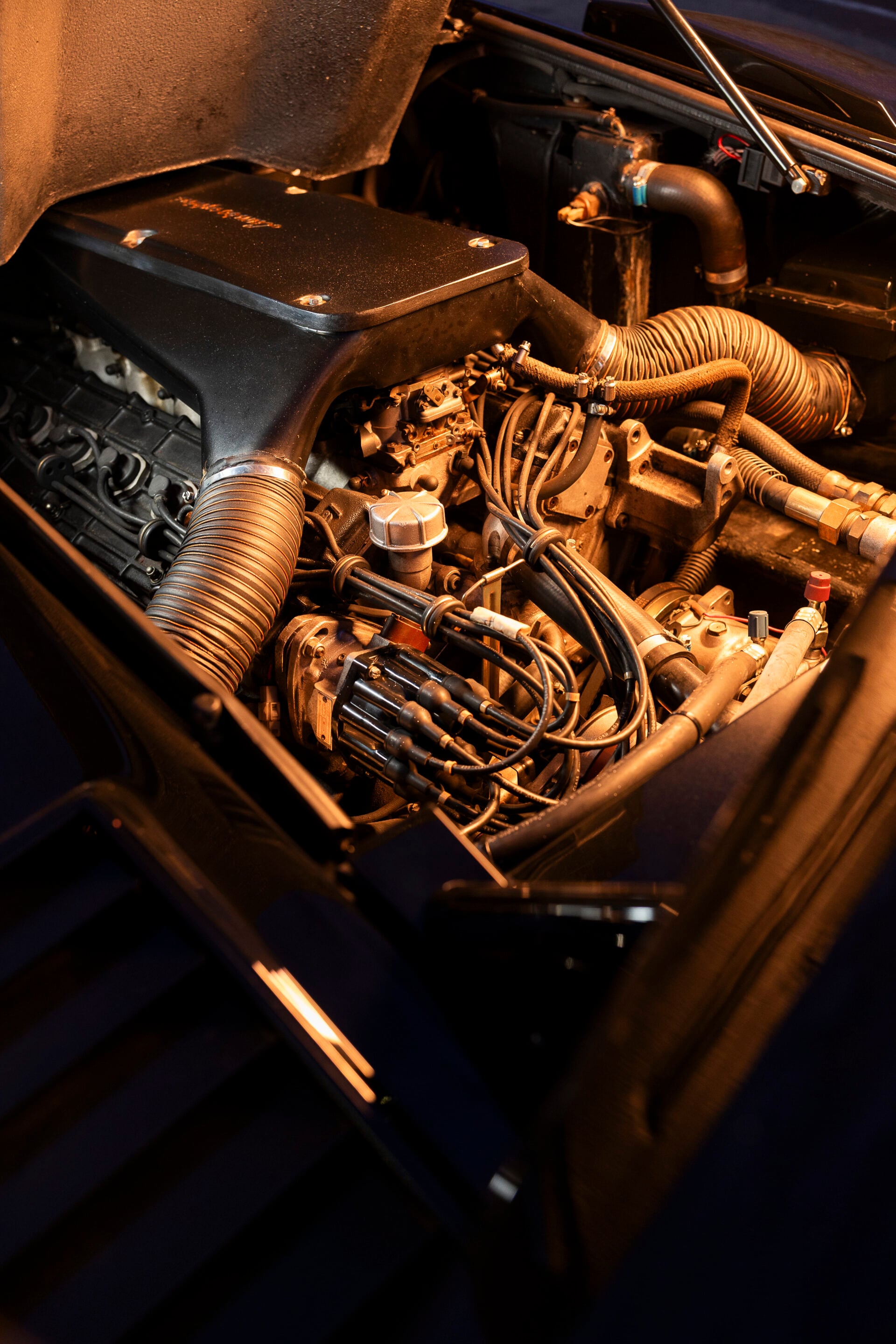
The first proper ‘production’ Countach was the yellow LP400 on display at the Geneva Show in 1974, and even that was a close-run thing. The car was still being finished at 2:30am on the day of the show’s opening. There was quite a to-do list to attend to in order to turn chassis 1120001 into a car that was ready for paying punters. The biggest change was from the planned five-litre V12 of the LP500 prototype to the smaller 3929cc unit, largely for durability reasons, as the bored and stroked version had grenaded itself on the test bench during initial testing.
The LP400 had the brake cooling ducts now integrated into the front wing sheetmetal, but the most obvious exterior change were the side windows. Lamborghini broke more than 20 panes of glass trying to get them to conform to the curved track of the Countach’s extreme tumblehome, and instead opted for a three-pane layout, where the lower pane could be lowered. The NACA ducts were painted satin black, as was the front grille area (from silver) and the aluminium body panels were beefed up to 1.5mm gauge to make them a bit more durable.
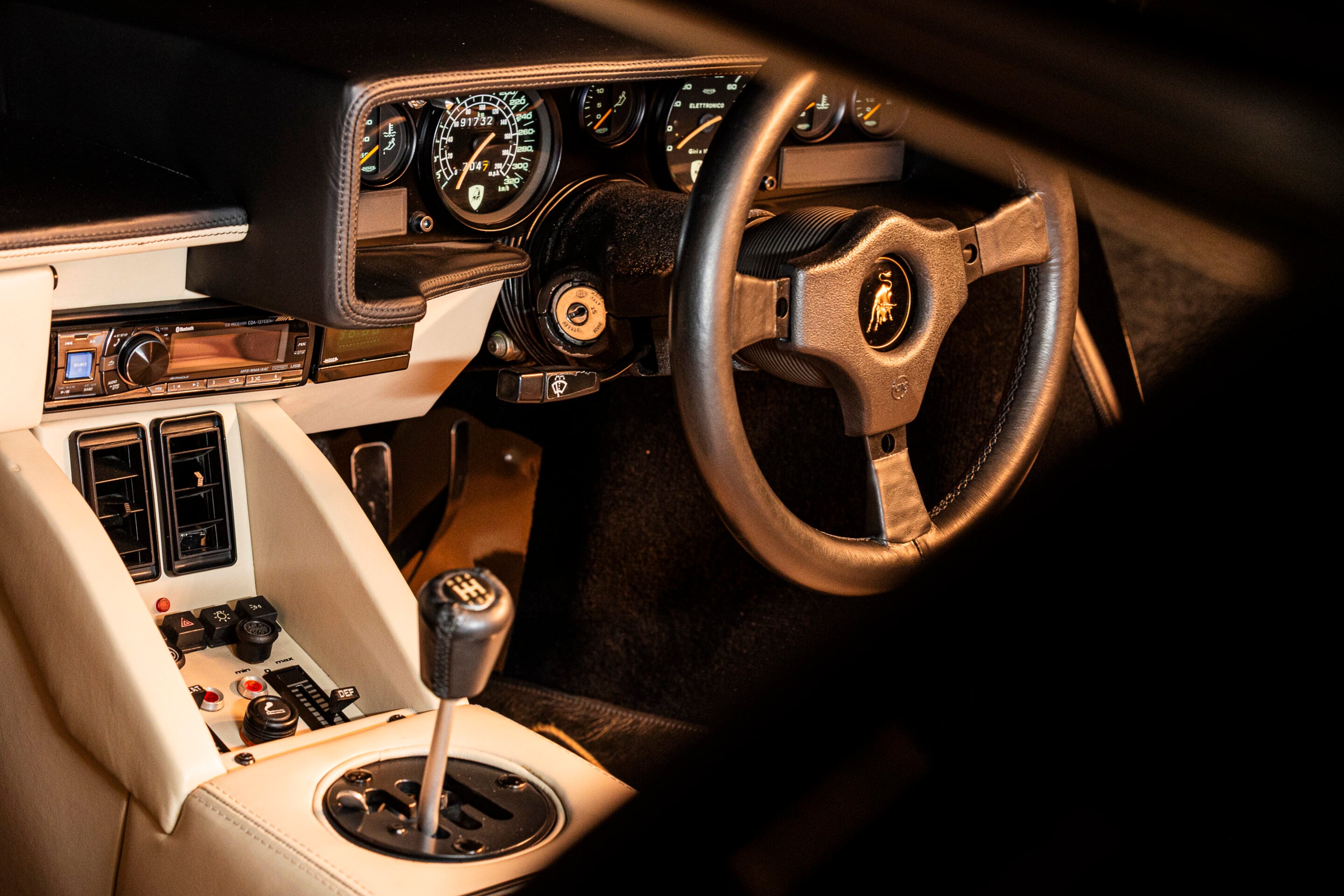
The cabin came in for some attention too, with a set of eight gauges supplied by US-firm Stewart Warner, while the dashtop was trimmed in dark suede after it was discovered that reflections made visibility a challenge. The door sills were altered and the position of the handbrake shifted forwards. These LP400 models are the most valuable and purest of all Countach models, with the auction record being a 1974 example sold by Goodings at Pebble Beach in August 2014 for $1.87m (AUD$2.85m). Since then, values have softened off a little, but now seem to be back on the rise.
Demand for the LP400 wasn’t a problem for Lamborghini. Finding the funds to keep the business afloat most certainly was, a theme that would persist on and off until Audi acquired the company in 1998. Enter Walter Wolf. The Canadian businessman was a repeat customer, a backer of Williams F1 and would go on to form his own team in 1977, with Jody Scheckter scoring three race wins. Wolf had some very firm ideas about his 1975 Countach.
In came a five-litre V12, along with the big tele-dial Campagnolo alloys from the Bravo Prototype, shod in massive (345/25R15 at the rear) Pirelli P7 tyres to replace the LP400’s Michelin XWXs. To cater for the wider wheels, the Wolf Countach got fender flares, and a massive rear aerofoil as fitted. Wolf was so taken with the aesthetic that he bought a second car, this one with the 3.9-litre engine. Lamborghini clearly thought that the more aggressive styling direction had some legs too, as the Wolf car would go on to inform the design direction of the 1978 LP400 S model, featuring the 257kW 3939cc V12.
These cars were delivered in three discrete series. The first 50 cars were Series One versions and were most faithful to that Walter Wolf look. They featured the same Campagnolo alloys but with body-coloured wheelarch extensions and optional, but famously non-functional, rear wing. These Countach models were the so-called ‘low body’, with lower suspension. The Series Two cars were largely similar, with 105 cars built, identifiable by their smooth finish dished alloys. Finally, from chassis number 1121312 on were the Series Three versions, which raised the suspension, and allowed for an additional three centimetres of headroom in the cabin. These were the final 82 cars to wear the LP400S badge.
It took until 1981, a decade after the Countach was first announced, before a Wheels staffer got to drive one. Peter Robinson drove an LP400 S2 on a wet Great Ocean Road during an eventful journey, where one of the two cars returned looking distinctly the worse for wear. “We came to realise that the Countach requires a firm grip, a strong hand and plenty of muscle,” Robbo noted. “Treat it softly, casually or timidly and it will laugh at you, and you get out wondering what all the fuss was about, though in truth the car will have frightened you away. But if you are demanding, brutal, aggressive then you will come to understand the Countach and, if your driving is up to the high standard required, then it will give you vast pleasure at a level few other cars can hope to attain.”
In that same November 1981 issue, Steve Cropley visited the factory to discuss how the company had just been rescued from bankruptcy by 24-year old Swiss businessman Patrick Mimram. Lamborghini had been put into effective receivership in August 1978. The price he paid for the company? A mere $4 million. It’s now estimated to be worth over $40 billion. Inflation aside, that’s a 10,000-fold increase. Let’s just say that corporate governance has improved in the interim.
The Countach finally got a larger capacity engine with the 1982 Countach LP500 S (also badged as the LP5000S in some markets). With its bore lifted from 82 to 85.5mm and stroke lengthened from 62mm to 69mm for a swept capacity of 4754cc, the 4.8-litre V12 was less stressed than the old 3.9, with compression dropped from 10.5:1 to 9.2:1. While the peak power figure was an identical 280kW it arrived at 7000rpm rather than 8000rpm, while peak torque lifted from 386Nm at 5000rpm to a more tractable 409Nm at 4500rpm. The engine update was much needed. Ferrari was rumoured to be readying a replacement for its aged BB 512i and in 1984 Ferrari announced the Testarossa, which featured a class-best 287kW from its flat-12.
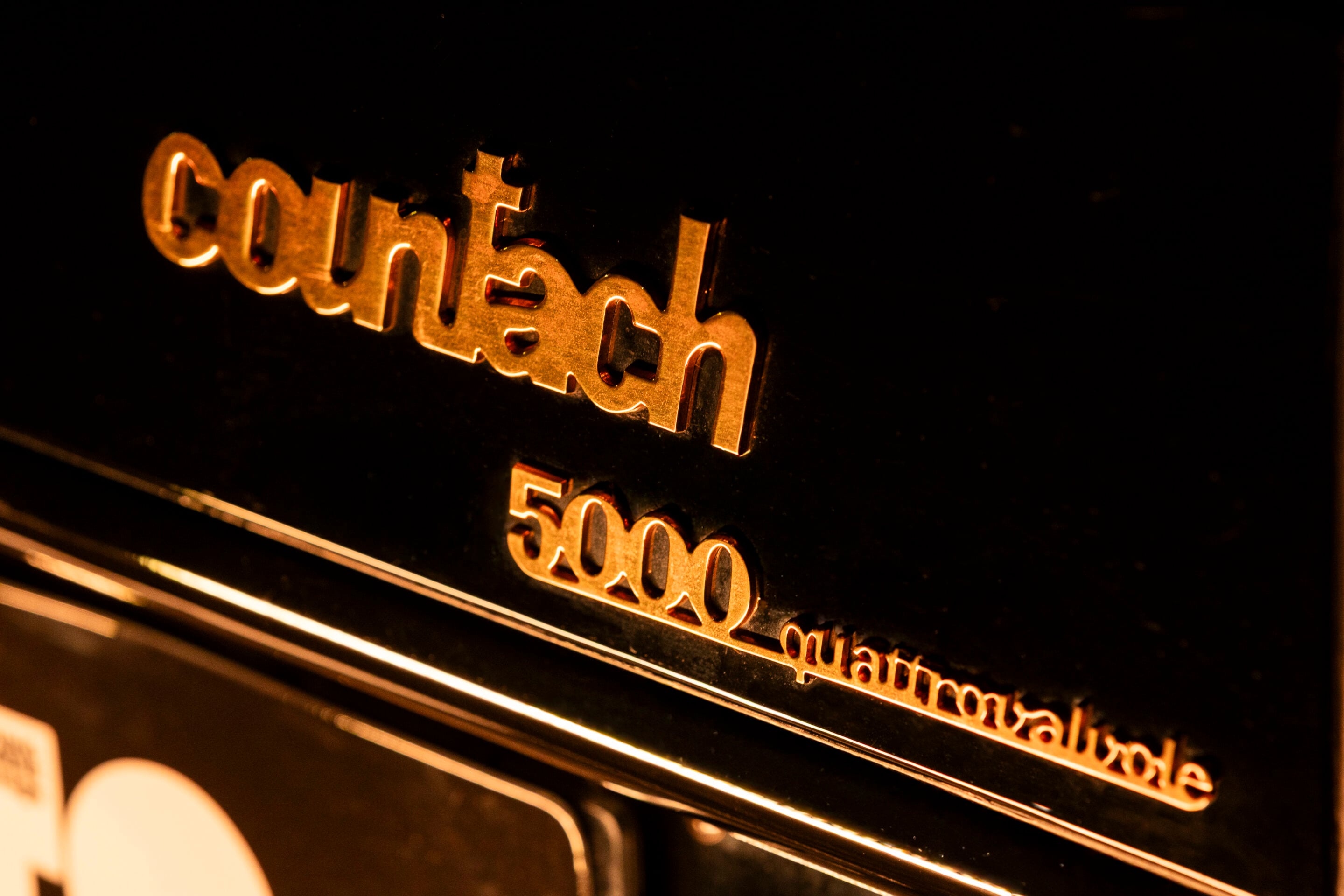
Maranello’s sense of superiority was not to last. Lamborghini’s riposte was the car you see on these pages, the Countach LP5000 QV. As the name suggests it adopted a four-valve, or quattrovalvole, cylinder head. Capacity grew to 5167cc, with power stepping up to a massive 335kW at 7000rpm and 500Nm at 5200rpm. The compression was lowered again, this time to 8:1. The QV was, for many, the ultimate Countach iteration and the poster car for a whole generation of kids. Robbo was again the man on the spot in a Wheels test in July 1988, summarising his drive with the words “take charge and you will have discovered why, after 17 years, it is unsurpassed.” Incidentally, that issue of the magazine also featured the car that would finally depose the Countach as the reigning monarch of Italian supercars; the Ferrari F40.
While most media outlets dismissed Lamborghini’s top speed claims as being distinctly fanciful, Peter Dron, the editor of UK magazine Fast Lane was invited to Sant’Agata in 1986 to witness for himself the speed of the QV. With F1 hotshoe Pierluigi Martini at the wheel, the Countach raced through the flying kilometre in 11.46 seconds, confirming an average speed of 314.1km/h (195.1mph). Dron claimed to have seen 325km/h (201.9mph) at one point on the speedo. It seemed the QV really could live up to the hype. Some years later, test driver Valentino Balboni admitted that the wingless car wasn’t exactly customer standard, with a non-standard airbox giving the car a boost in top-end power to combat its 0.42Cd drag coefficient.
When German title Sport Auto put the Countach QV up against the Ferrari Testarossa in June 1987, it discovered that the 1490kg Lamborghini was significantly quicker out of the blocks, registering 0-100km/h in 4.8 seconds versus the 1630kg Ferrari’s 5.6-second showing. Keeping the throttle mashed through 200km/h saw the QV stop the clock at 17 seconds, with the Testarossa registering 18.8 seconds. Yet on a lap of their reference circuit, the Hockenheim Short Course, the two were almost inseparable, the Testarossa scoring pole with a 1m19.9sec lap and the Countach just two-tenths in arrears, crossing the line in 1min20.1sec. The Ferrari was more stable in the higher speed corners, with the Lamborghini clawing back an advantage accelerating out of tighter bends.
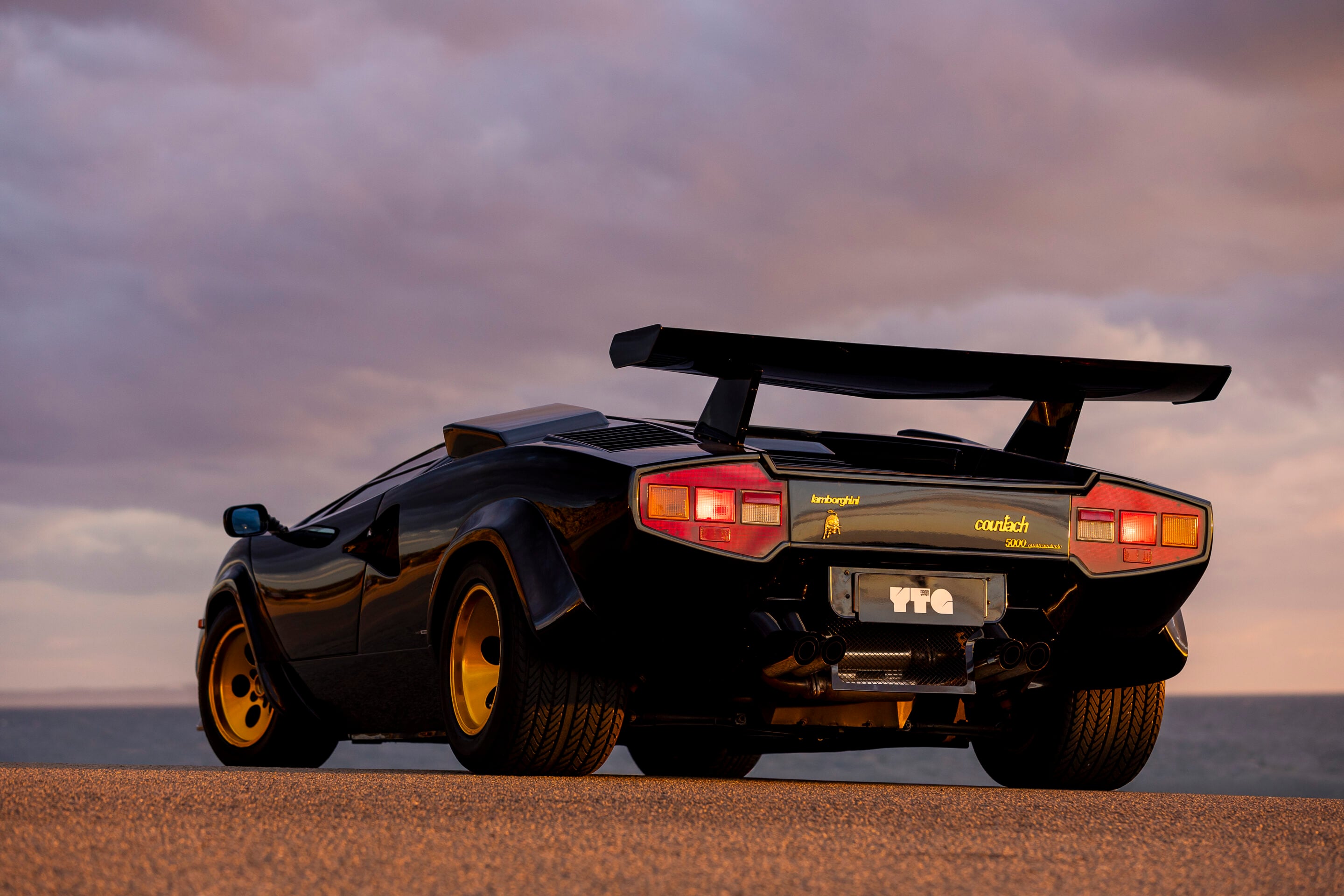
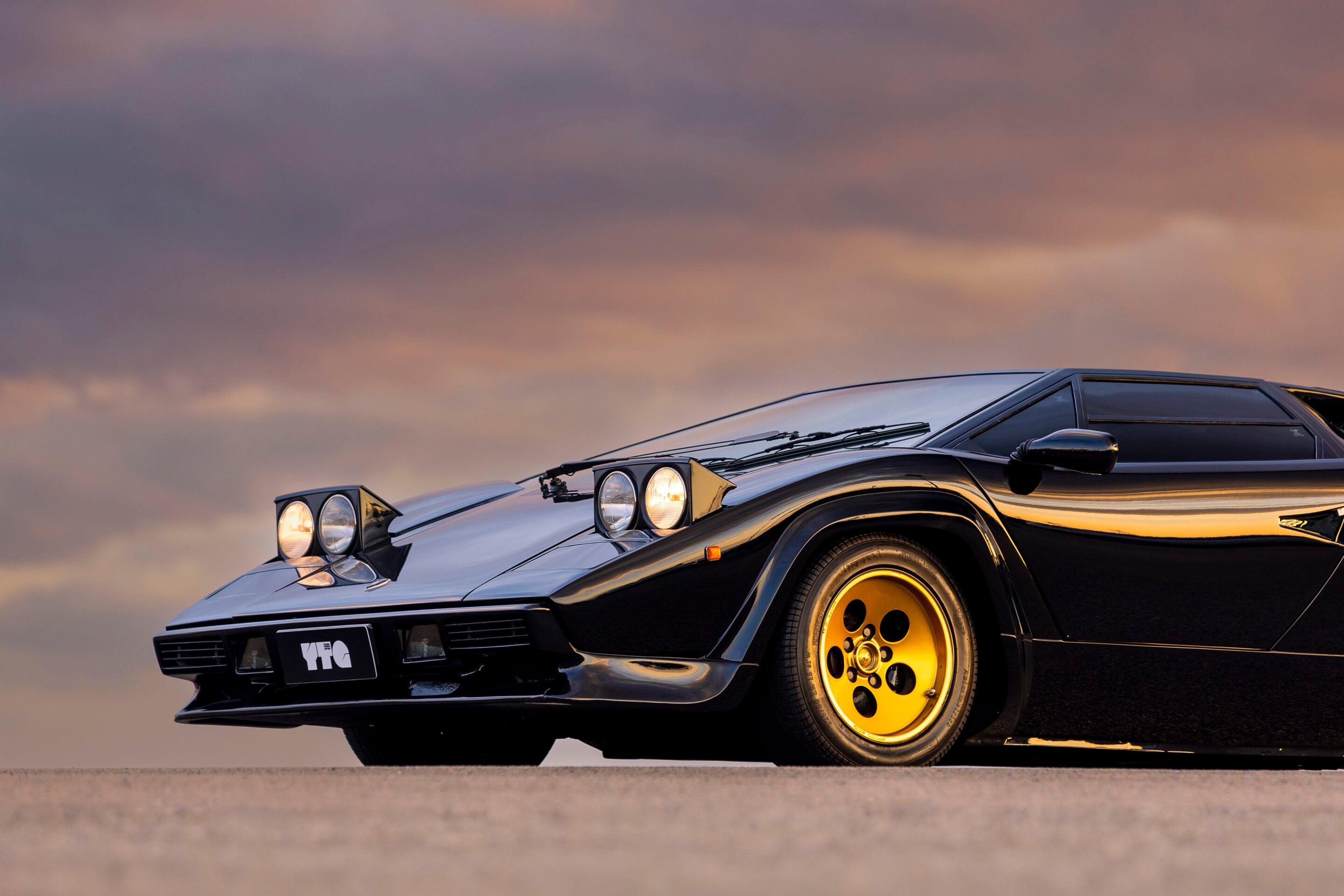
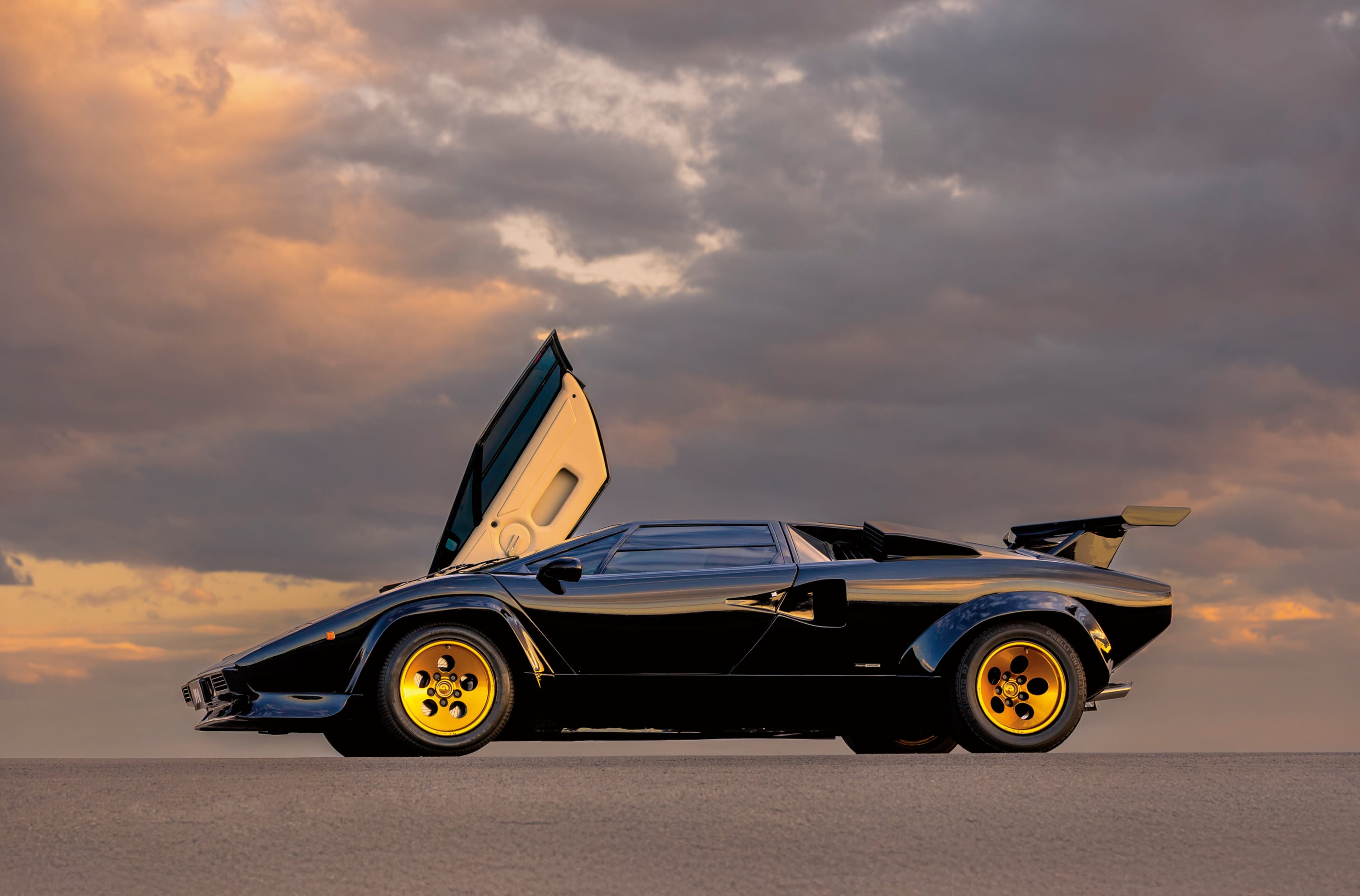
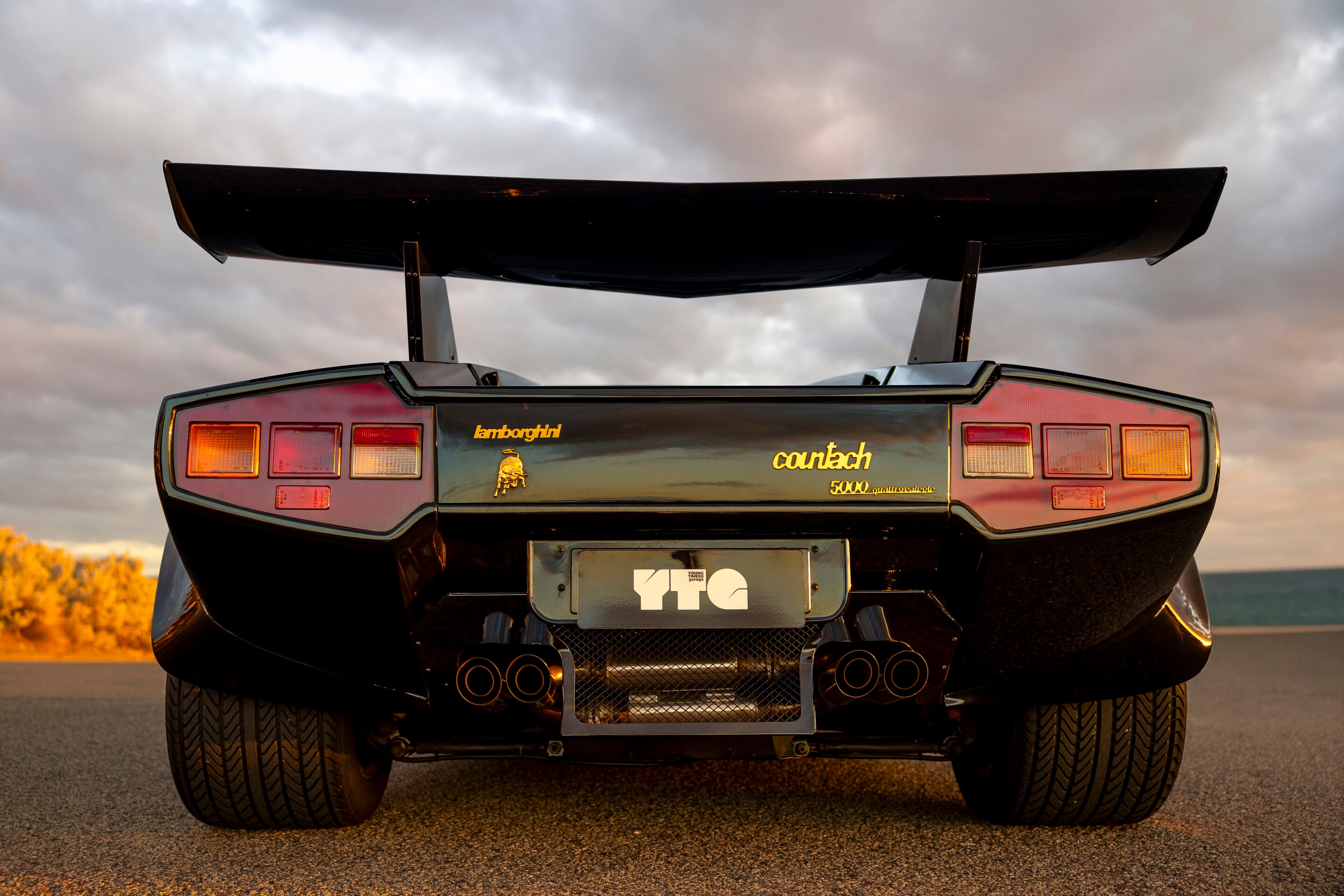
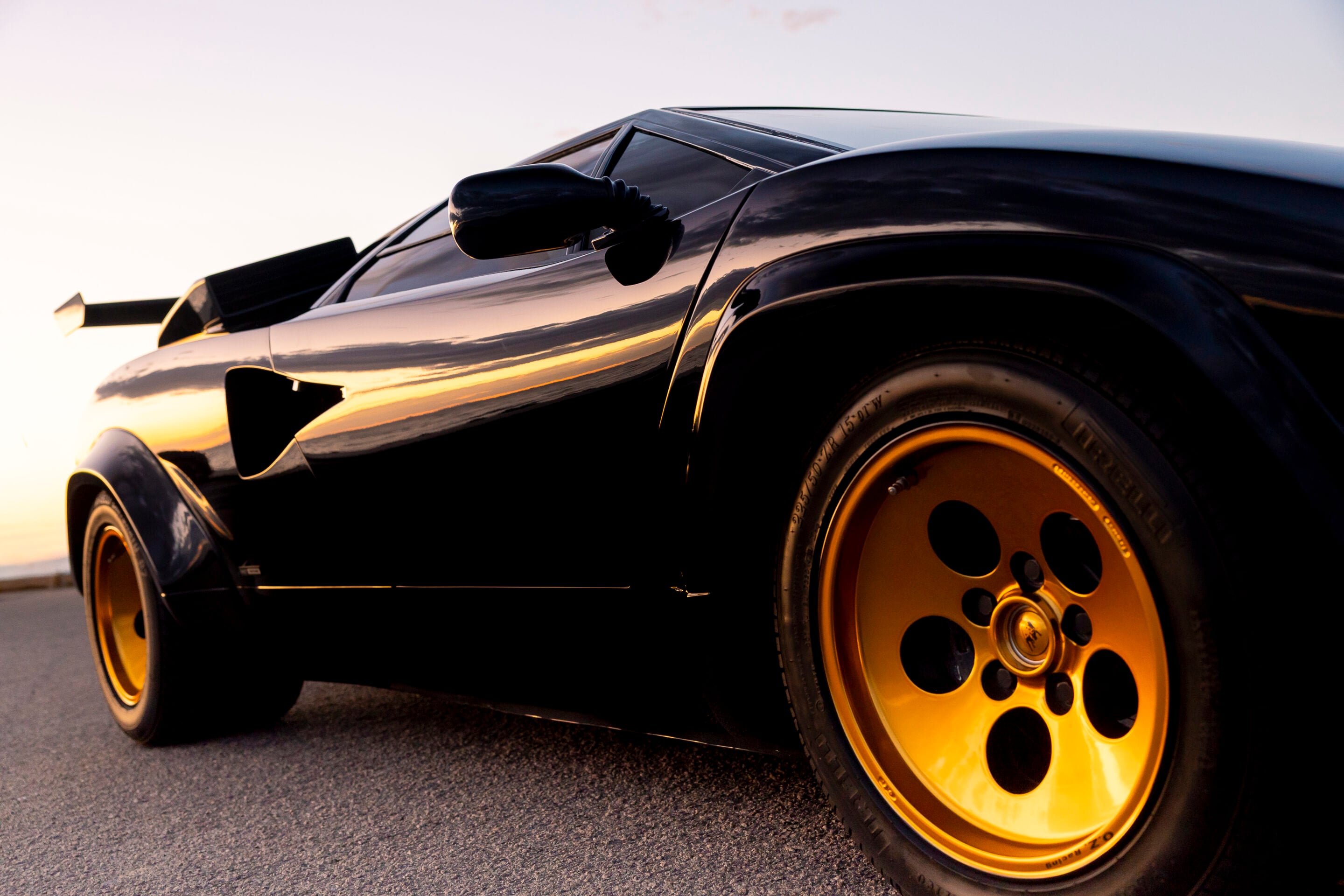
The 1986 QV you see here was originally a UK car finished in red, and was shipped to Australia by its current owner 20 years ago. Feeling that red was a colour more readily associated with the mob down the road, its owner had it painted black, with the silver OZ alloys in this beautiful satin gold. At the same time, it was treated to a meticulous nut and bolt restoration. The smoked lenses on the driving lights are per the owner’s preference, but he’s kept the clear originals. It’s covered a healthy 91,300km so it’s certainly no garage queen and is for sale at Young Timers Garage.
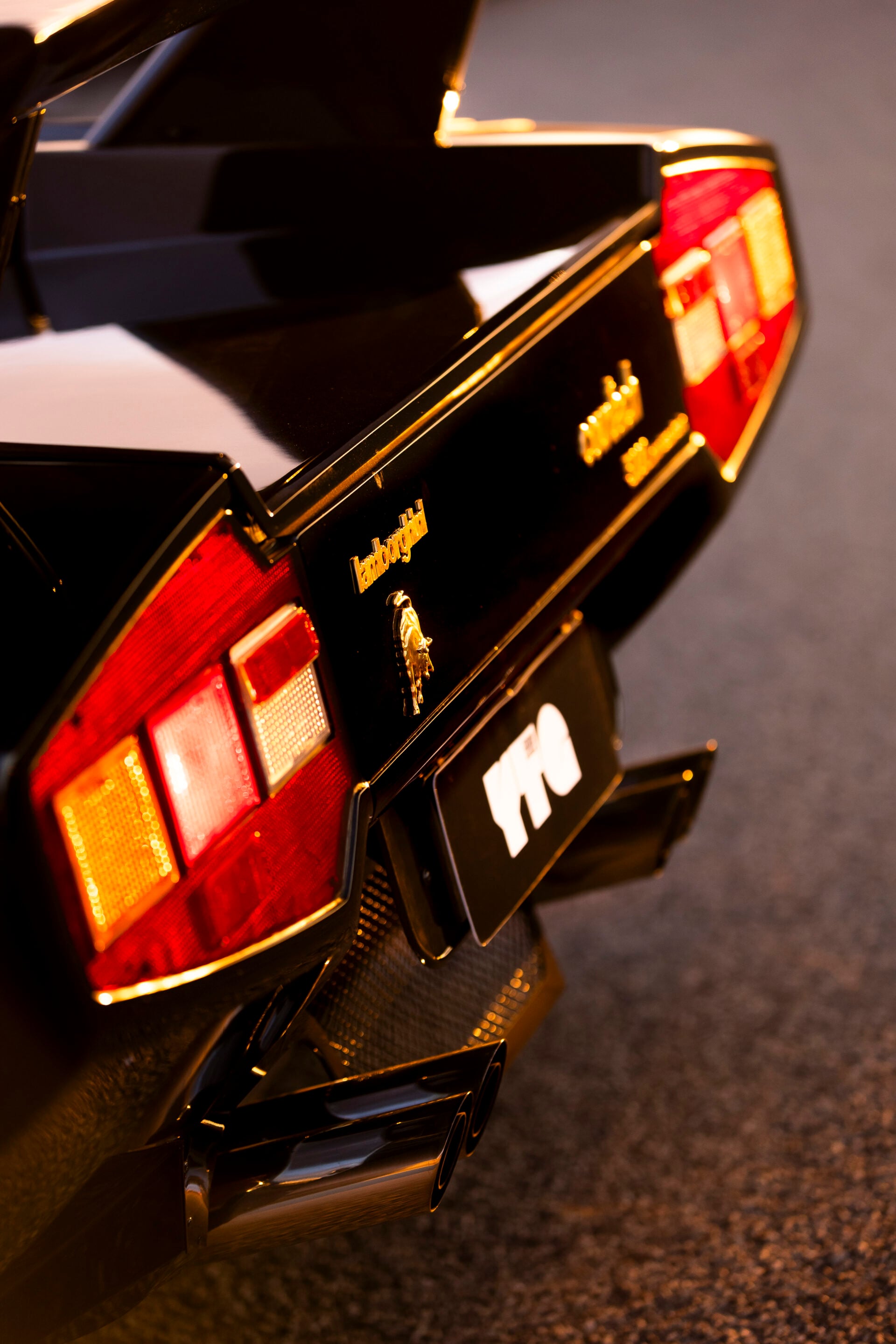
If the QV represented peak aggression, its successor, the 25th Anniversario was perhaps the moment that the Countach entered its Elvis in Vegas era. Announced in 1988 to mark 25 years of Lamborghini as a company, it features straked side skirts that are a slightly lame riff on the Testarossa’s styling signature, a raised nose, heavier bumpers and a rear light cluster that lost all of the drama and purity of the original and instantly recognisable shape. The styling work was done by in-house composites expert Horacio Pagani (yes, him) who was handed a thankless brief. Nevertheless, following his work on the Countach Evoluzione design study, the Anniversary was treated to carbon fibre panels for the bonnet and engine cover.
It’s a shame the Chrysler-developed Anniversary’s aesthetic had jumped the shark, as the mechanical package was excellent, making it the best Countach to drive. The tyres were the much-improved Pirelli P Zero, running on two-piece forged OZ alloys, while the suspension was still the same rose-jointed setup with double wishbones front and rear with Koni dampers.
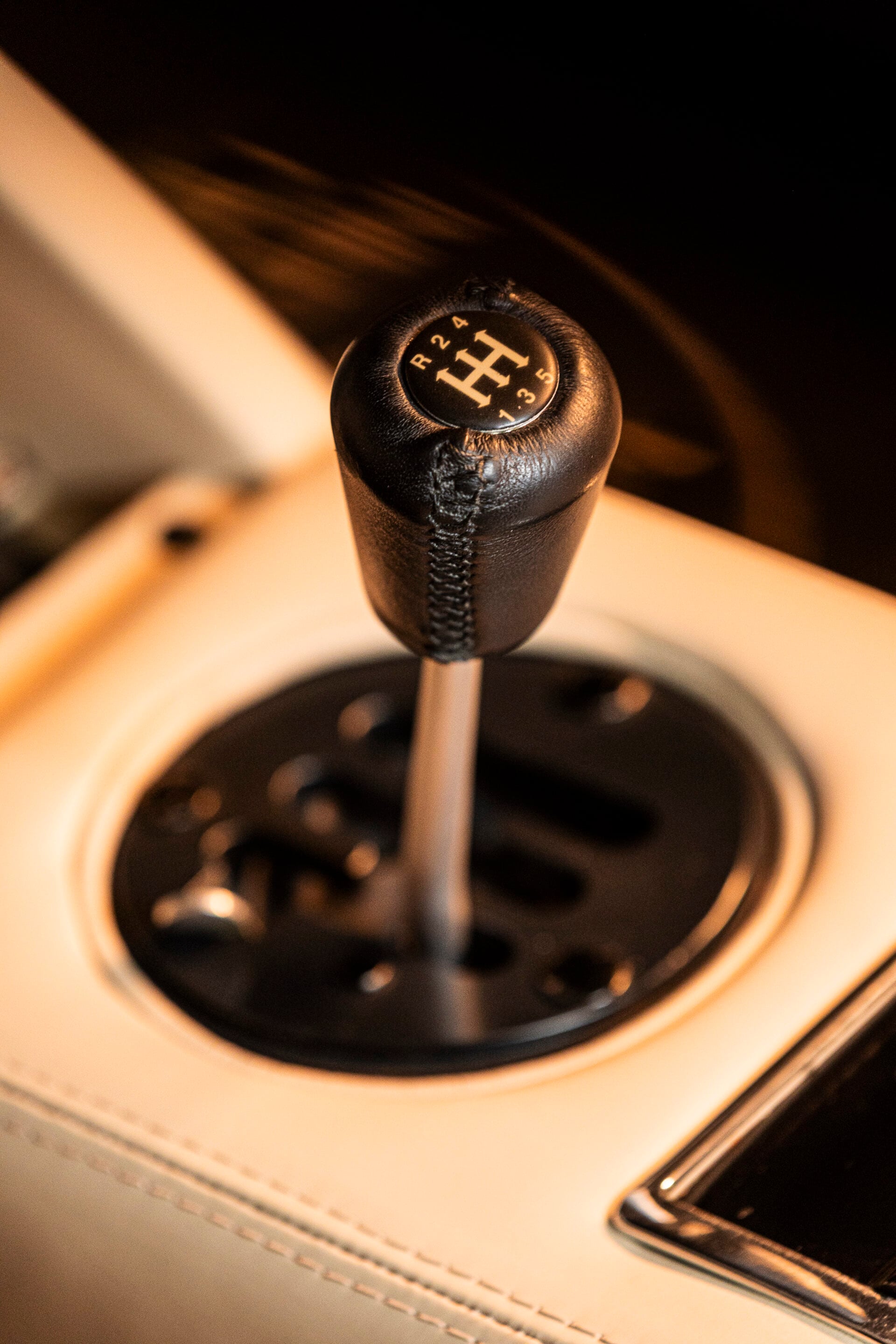
The mechanical reliability of the engine was improved, with a redesigned engine bay easing access to ancillaries and helping cut servicing costs. Taller drivers could specify a fixed back sports seat instead of the standard electric items as this yielded a few centimetres of extra headroom. The electric windows, a redesigned HVAC interface and a redesigned gear shifter were all features that would carry over into the Countach successor, the Diablo. Despite being on sale for just 19 months, the Anniversary was the biggest selling Countach variant, thanks to its success as a fully federalised car for the US market.
The Diablo arrived in 1990 and started a pattern of ever bigger, heavier and more mechanically complex V12 Lamborghini models. By today’s standards, the Countach seems a very small and very simple car, shrink wrapped around its engine and transmission in the way an A-10 Thunderbolt II jet is built around its massive GAU-8 Gatling cannon. Fire up that V12 though, and any suspicion that age has mellowed its ferocity is instantly dispelled. There’s no ABS, no traction control, no airbags, no stability control – it’s just you, that howling engine and four contact patches.
For years undervalued by collectors, the Countach has recovered. Perhaps it’s the realisation of this car’s rarity, with only 1998 customer cars ever built over 17 years, with fewer than 1600 remaining today.
The Countach is an icon of late 20th century cars. Revisionists will try to tell you that it was never that good, or that it was a car that drove Lamborghini to the brink of ruin, or that the Ferrari Berlinetta Boxer was superior but they’d be wrong. I believe one thing is unarguable. No other car before or since has ever captivated so many people and seduced them with the magic of what a car could do, could be and could represent. To many, Lamborghini sold a dream. To the few, it sold something even more special.
What Goes Around…
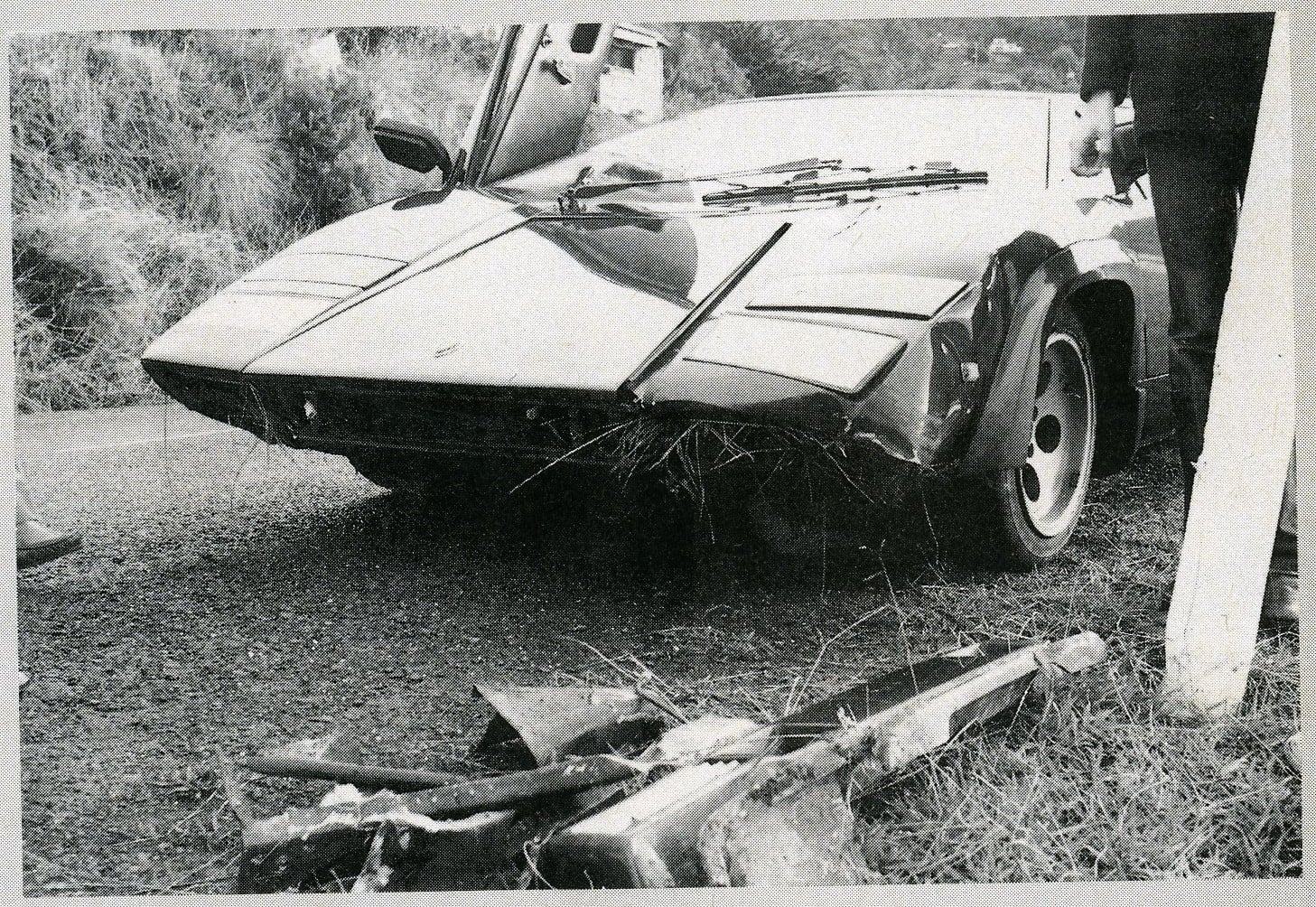
Read Peter Robinson’s 1981 test of the Countach S on the Great Ocean Road and it’s clear that he treated the car and the tricky conditions with a considerable measure of respect. Unfortunately, Wheels dep-ed Bob Murray wasn’t quite so circumspect in the other Countach and managed to remodel the nose of one car after having a spin. Robbo managed to persuade the MD not to fire Murray, and the favour was returned years later when Bob hired Robinson as European editor for Autocar.
Specs
| Model | Lamborghini Countach LP5000 QV |
|---|---|
| Engine | 5167cc V12, DOHC, 48v |
| Power | 335kW @ 7000rpm |
| Torque | 500Nm @ 5200rpm |
| Transmission | 5-speed manual |
| L/W/H/WB | 4240/2000/1070/2473mm |
| Fuel tank | 2x50L |
| Kerb weight | 1490kg |
| 0-100km/h | 4.8sec |
| Price (now) | c.$1.7m |
Thanks to Young Timers Garage and Theo George. This article first appeared in the January 2026 issue of Wheels. Subscribe here and gain access to 12 issues for $109 plus online access to every Wheels issue since 1953.
Chinese automotive heavyweight Geely is preparing to enter the serious off-road SUV market with a large, rugged four-wheel-drive aimed squarely at icons such as the Toyota LandCruiser and Land Rover Defender. While the vehicle has been confirmed for overseas markets from 2028, its development signals Geely’s growing ambition in traditionally conservative segments.
The as-yet-unnamed production model was previewed by the Galaxy Cruiser concept, unveiled at the 2025 Shanghai Motor Show. According to Geely’s head of design, Flavien Dachet, the concept is around 90 to 95 per cent representative of the final showroom version, which is expected to be revealed later this year.

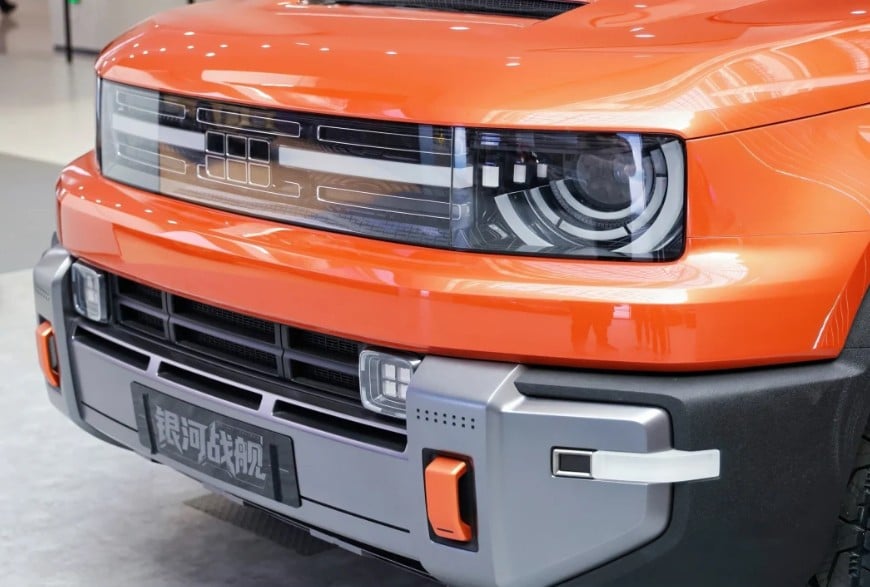
Visually, the Galaxy Cruiser wears a familiar silhouette. Its upright stance, boxy proportions and exposed exterior elements clearly echo classic off-roaders. Dachet has acknowledged that the design draws from established four-wheel-drive conventions, noting that vehicles like the Defender, Mercedes-Benz G-Class and Ford Bronco all follow similar functional cues born from off-road necessity.
Despite the similarities, Geely’s designers aimed to strike a balance between toughness and approachability. The goal, Dachet says, was to create something that looks capable and muscular without appearing overly aggressive. Distinctive design touches include angular daytime running lights inspired by Chinese cultural motifs, though these are expected to be toned down for the production model, along with a slightly narrower body.
Inside, the Galaxy Cruiser is expected to lean more towards comfort and technology than some of its rivals. The concept featured a premium-looking cabin with physical switches, a prominent centre console and a large gear selector, signalling a more upmarket approach than traditional utilitarian off-roaders.
Underneath, the SUV is based on Geely’s advanced GEA Evo platform, which also underpins the Galaxy M9 luxury SUV. This architecture supports technologies such as steer-by-wire, brake-by-wire and four-wheel steering, enabling features like tight turning circles and even crab-walking. The concept also showcased a plug-in hybrid system that uses artificial intelligence to switch between electric, hybrid and range-extender modes depending on terrain.
While final specifications are yet to be confirmed, the related M9’s system combines a 1.5-litre petrol engine with three electric motors, producing around 640kW. If similar outputs carry over, it would comfortably exceed most current off-road SUVs on power alone.
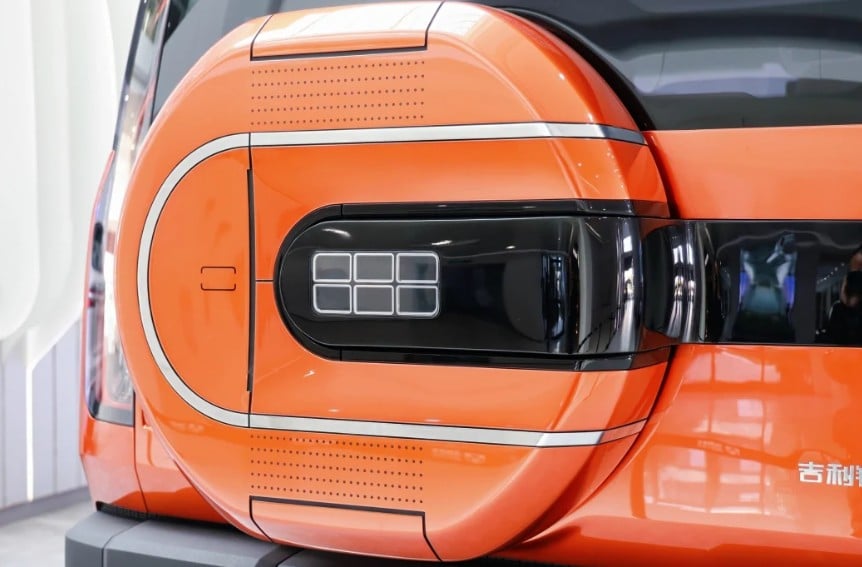
Geely says prototypes have already undergone desert testing in China, with strong off-road performance reported. Ground clearance, large wheels and a claimed wading depth of around 800mm point to genuine capability. For Geely, this model represents a first step into the off-road arena—and potentially the beginning of a broader rugged SUV range.
Hybrid SUVs are all the rage these days, and while ‘self-charging’ hybrids like the Toyota RAV4 and MG HS Hybrid+ are the big sellers, there has been a big rise in plug-in hybrid sales thanks to the arrival of many new PHEVs on the market.
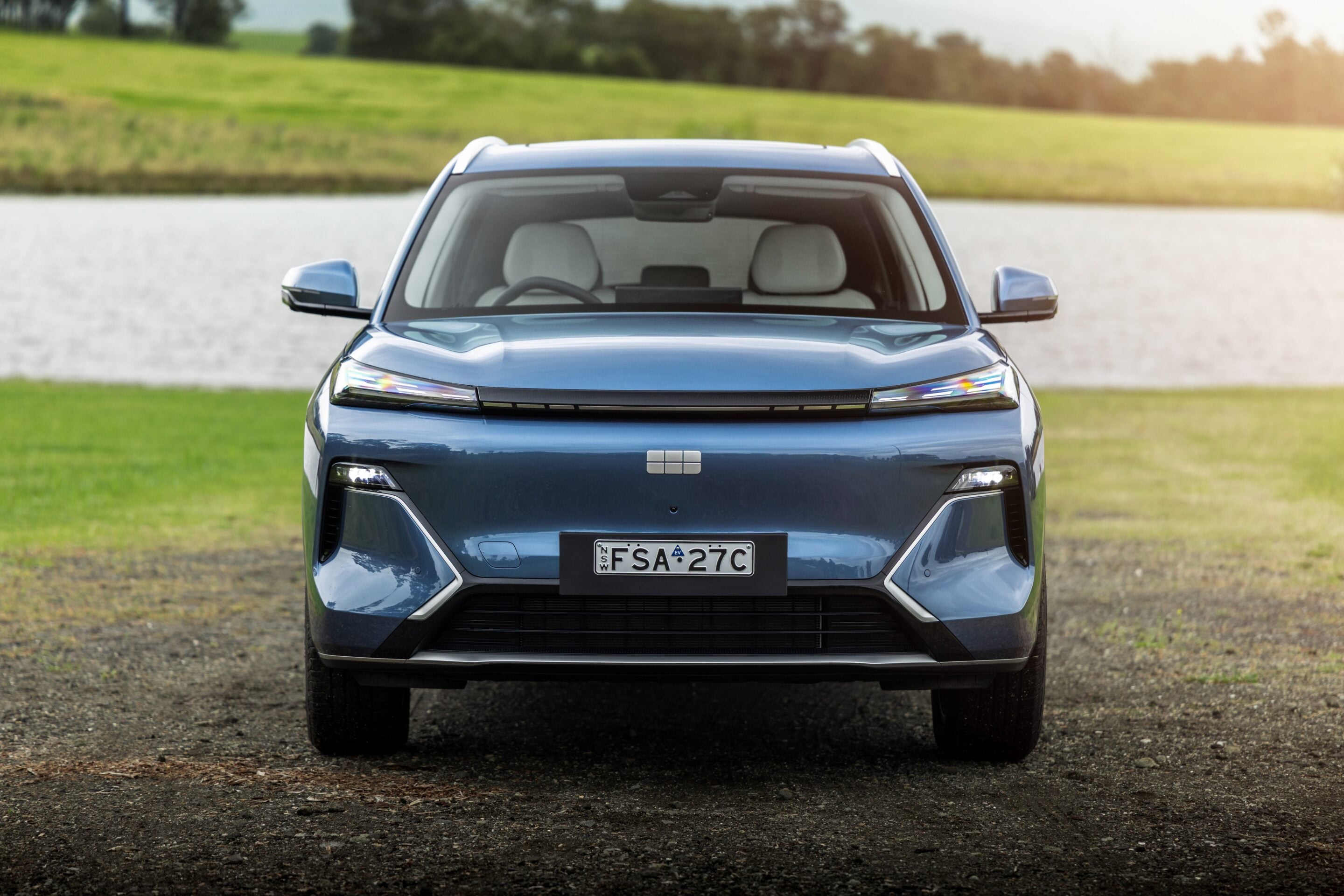
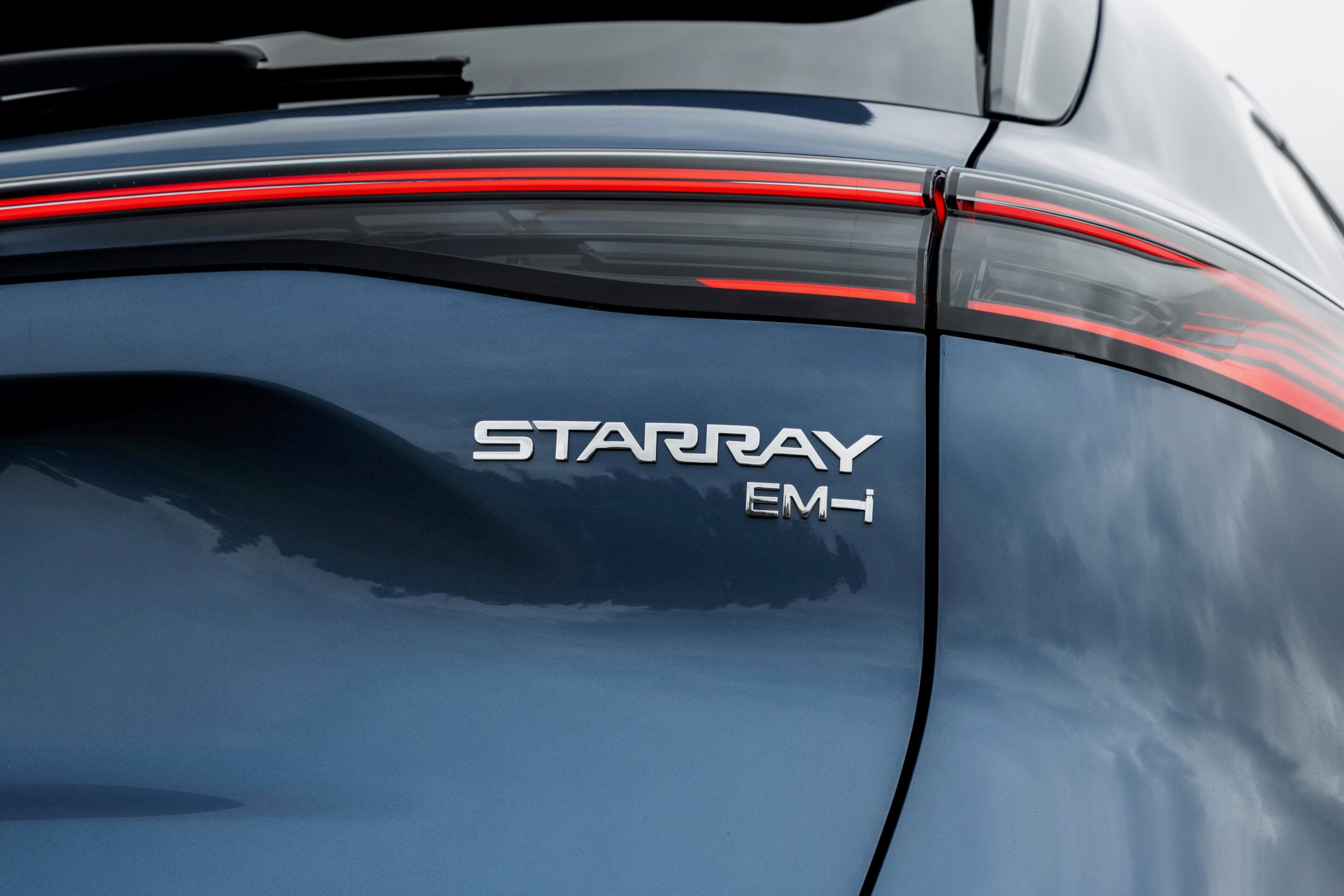
The Mitsubishi Outlander PHEV was the pioneer and used to be the PHEV sales champion globally, but its market share is being chipped away at by new rivals such as the Geely Starray, which recently launched in Australia sporting the excellent value the brand is known for.
Pricing
Immediately, the Starray EM-i gets off to a great start against the Outlander PHEV thanks to its pricing, at $39,990 plus on-road costs. And that’s for the upper-spec Inspire model, so if you aren’t in need of features such as a power tailgate and ambient cabin lighting, save yourself $1500 to get the lower-spec Complete.
By contrast, the cheapest Outlander PHEV variant – in the 2025 model range (pricing for the 2026 model is yet to be announced but we’ll update this article once done) – starts at $57,290 plus on-road costs, which is almost $20,000 more than the Starray. Despite the price difference, the Starray is actually much better equipped and that’s because the Outlander ES is the entry level model.
Both Geely and Mitsubishi offer impressive warranty programs: seven years for the former and five years (extendable to 10 years in total) for the latter, while both feature 12 months of roadside assistance that is topped up a further 12 months by each dealer service up to seven years in total for the Geely and 10 years for the Mitsubishi. The Outlander PHEV’s five-year service cost asks $37 more annually, but that’s not a massive difference, and both cars should be cheap to run.
| Geely Starray EM-i Inspire | Mitsubishi Outlander PHEV ES | |
|---|---|---|
| Starting price | $39,990 plus on-road costs | $57,290 plus on-road costs (pre-facelifted model) |
| Premium paint | + $600 | + $790 – $990 |
| Warranty | Seven-year/unlimited km | Five-year/100,00km, extendable up to 10 years/200,000km with dealer servicing |
| Service intervals | Annually/every 15,000km | Annual/every 15,000km |
| Five-year service cost | $1932 ($387 per year) | $2119 ($424 per year) |
| Roadside assistance | 12 months renewed with every dealer service up to seven years in total | 12 months renewed with every dealer service up to 10 years in total |
Dimensions
Both the Starray and Outlander PHEV are classed as mid-size SUVs. At 4740mm long, the Starray is only 30mm longer than the Outlander, and its 1905mm width is 43mm greater too.
But the Outlander is the taller of the two at 1740mm – 55mm more than the Geely – and its 2020kg kerb weight is a significant 250kg more than the newcomer. For bootspace, the Starray’s 428-litre space looks small in the segment, with the Outlander 66 litres more commodious – but fold the seats down and the Geely reportedly offers a huge 651 litres of more space.
| Geely Starray EM-i Inspire | Mitsubishi Outlander PHEV ES | |
|---|---|---|
| Length | 4740mm | 4710mm |
| Width | 1905mm | 1862mm |
| Height | 1685mm | 1740mm |
| Wheelbase | 2755mm | 2706mm |
| Kerb weight | 1770kg | 2020kg |
| Luggage space | 428 litres – 2065 litres | 494 litres – 1414 litres |
Standard features
Not only is the Starray significantly cheaper than the Outlander PHEV, but it’s also much better equipped as standard. Additional kit compared to the Mitsubishi on the Geely includes larger wheels, more advanced headlights, automatic wipers, synthetic leather trim, electric front seat adjustment and double both the speaker and USB port count (16 versus eight and four versus two respectively).
| Geely Starray EM-i Inspire | Mitsubishi Outlander PHEV ES | |
|---|---|---|
| Wheels | 19-inch alloy | 18-inch alloy |
| Headlights | LED projector | LED reflector |
| Wipers | Rain-sensing automatic | Manual intermittent |
| Seat adjustment | Six-way electric driver, four-way electric passenger | Six-way manual driver, four-way manual passenger |
| Upholstery | Synthetic leather | Cloth |
| Steering wheel | Leather | Urethane |
| Push button start | Yes | Yes |
| Climate control | Dual-zone automatic with rear vents | Dual-zone automatic with rear vents |
| Stereo | 1000W 16-speaker Flyme | Eight-speaker Yamaha |
| In-car charging | 4 x USB, wireless phone charger (front) | 2 x USB (front) |
Performance, fuel economy and charging
Both the Starray and Outlander PHEV are plug-in hybrids, which offer all-electric driving until their batteries are depleted and then they act like a normal hybrid afterwards. Like every other PHEV, their efficiency depends on how much they are charged – keep them topped up and they’ll almost hit 100km on electric power alone, but keep them running purely as a hybrid and consumption will climb.
The Geely relies on a smaller engine than the Mitsubishi – 1.5-litres versus 2.4-litres – but its total peak power is 8kW more at 193kW. The Geely’s battery is also smaller than the Mitsubishi’s at 18.4kWh versus 22.7kWh, yet its WLTP electric range is only 3km less at 83km. Both can be recharged at up to 30kW on a DC fast charger, though the Outlander PHEV uses the rarer CHAdeMO connector.
| Geely Starray EM-i Inspire | Mitsubishi Outlander PHEV ES | |
|---|---|---|
| Engine | 1.5-litre four-cylinder plug-in hybrid | 2.4-litre four-cylinder plug-in hybrid |
| Peak power | 193kW | 185kW |
| Combined fuel consumption | 2.4L/100km | 1.5L/100km |
| Electric range (WLTP) | 83km | 86km |
| Battery capacity/peak charge rate | 18.4kWh, 30kW DC | 22.7kWh, 30kW DC |
| Fuel type/tank size | 51 litres/95RON premium unleaded | 56 litres/91RON regular unleaded |
Safety
While the Starray is yet to be tested by ANCAP for crash safety, its EX5 sibling was given a five-star rating in 2025, as was the updated Outlander PHEV earlier in 2025. Both feature a full suite of active safety features, including autonomous emergency braking, adaptive cruise control, lane keeping assistance, front and rear parking sensors and a 360-degree camera.
| Safety | Geely Starray EM-i Inspire | Mitsubishi Outlander PHEV ES |
|---|---|---|
| Airbags | Seven | Eight |
| Adaptive cruise control | Yes | Yes |
| Autonomous emergency braking | Yes (with pedestrian and daytime cyclist assistance) | Yes (with pedestrian assistance) |
| Lane-keep assist | Yes (with adaptive lane guidance) | Yes |
| Blind-spot monitoring | Yes | Yes |
| Rear cross-traffic alert | Yes (with braking) | Yes (with braking) |
| Driver attention monitoring | Yes | Yes |
| Parking sensors | Front and rear | Front and rear |
| Reversing camera | 360-degree | 360-degree |
| ISOFIX | Outboard rear seats | Outboard rear seats |
Technology
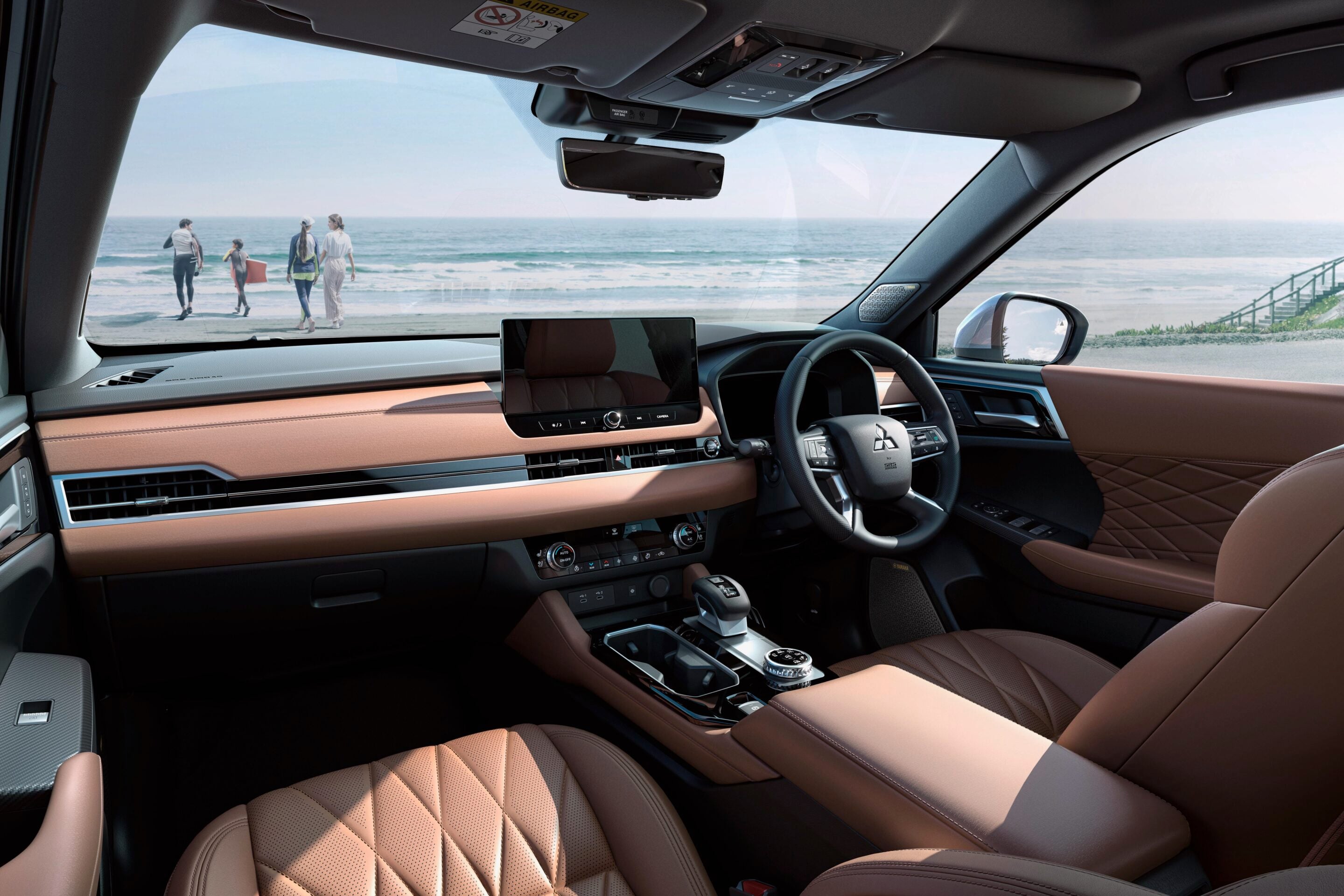
Both the Starray and Outlander PHEV are equipped with a long list of technology features, though the Geely has more screen real estate with its massive 15.4-inch touchscreen, as well as a large 13.8-inch head-up display in front of the driver. But the Outlander PHEV features both a 12.3-inch touchscreen and a 12.3-inch digital driver’s display, which is smaller than the Starray, but still impressive.
| Geely Starray EM-i Inspire | Mitsubishi Outlander PHEV ES | |
|---|---|---|
| Driver’s display | 10.9-inch digital + 13.8-inch head-up display | 12.3-inch digital |
| Touchscreen | 15.4-inches | 12.3-inches |
| Satellite navigation | Yes | Yes |
| Radio | FM/DAB+ | AM/FM/DAB+ |
| Smartphone mirroring | Wireless Apple CarPlay (wireless Android Auto coming soon via OTA update) | Wireless Apple CarPlay and Android Auto |
Conclusion: Geely Starray EM-i or Mitsubishi Outlander PHEV?
Based purely on specifications, the Geely Starray EM-i is an impressive product that will no doubt boost plug-in hybrid sales in Australia thanks to its impressive EV range, DC fast charging, long list of standard features and – most notably of all – very keen pricing. At just $39,990 plus on-road costs, the Starray EM-i Inspire not only undercuts the Outlander PHEV ES significantly, but it’s actually the same price as the entry-level petrol Outlander ES.
That’s not to say that the Outlander PHEV ES is a bad purchase, because it’s still equipped with a full suite of safety features, large displays in the cabin and an industry-leading 10-year warranty (with dealer servicing) and cheap servicing. But the Outlander PHEV’s qualities are not enough to overcome a near-$20,000 price difference and if you’re searching for a plug-in hybrid mid-size SUV, the Geely Starray EM-i should definitely be on your consideration list.
Victoria’s long-running association with the Australian Motorcycle Grand Prix appears under serious threat, with new reporting suggesting the MotoGP could be lost from Phillip Island after almost 30 years.
According to The Age, negotiations between the Australian Grand Prix Corporation (AGPC) and MotoGP commercial rights holder Dorna Sports have reached a critical impasse. While talks have been ongoing for months to extend the event’s current contract, sources familiar with the discussions say Dorna has pushed for the race to be relocated to Melbourne’s Albert Park if a new deal is to be agreed.
The demand is understood to have complicated negotiations with the Victorian government, which has reportedly increased its financial offer to retain the race at Phillip Island but is reluctant to fund the extensive infrastructure changes that would be required to stage a motorcycle event at Albert Park. Dorna’s stance reflects a broader shift in direction following its acquisition by Liberty Media, the owners of Formula 1, with street circuits now being more actively considered.
The Age reports that the stalemate has opened the door for rival bids, with the South Australian government holding discreet discussions with Dorna late last year about potentially hosting the Australian MotoGP on a street circuit in Adelaide.
A Victorian government spokesperson confirmed negotiations remain confidential but reiterated the state’s preference to keep the race at Phillip Island, describing the event as inseparable from the circuit and the Bass Coast region.
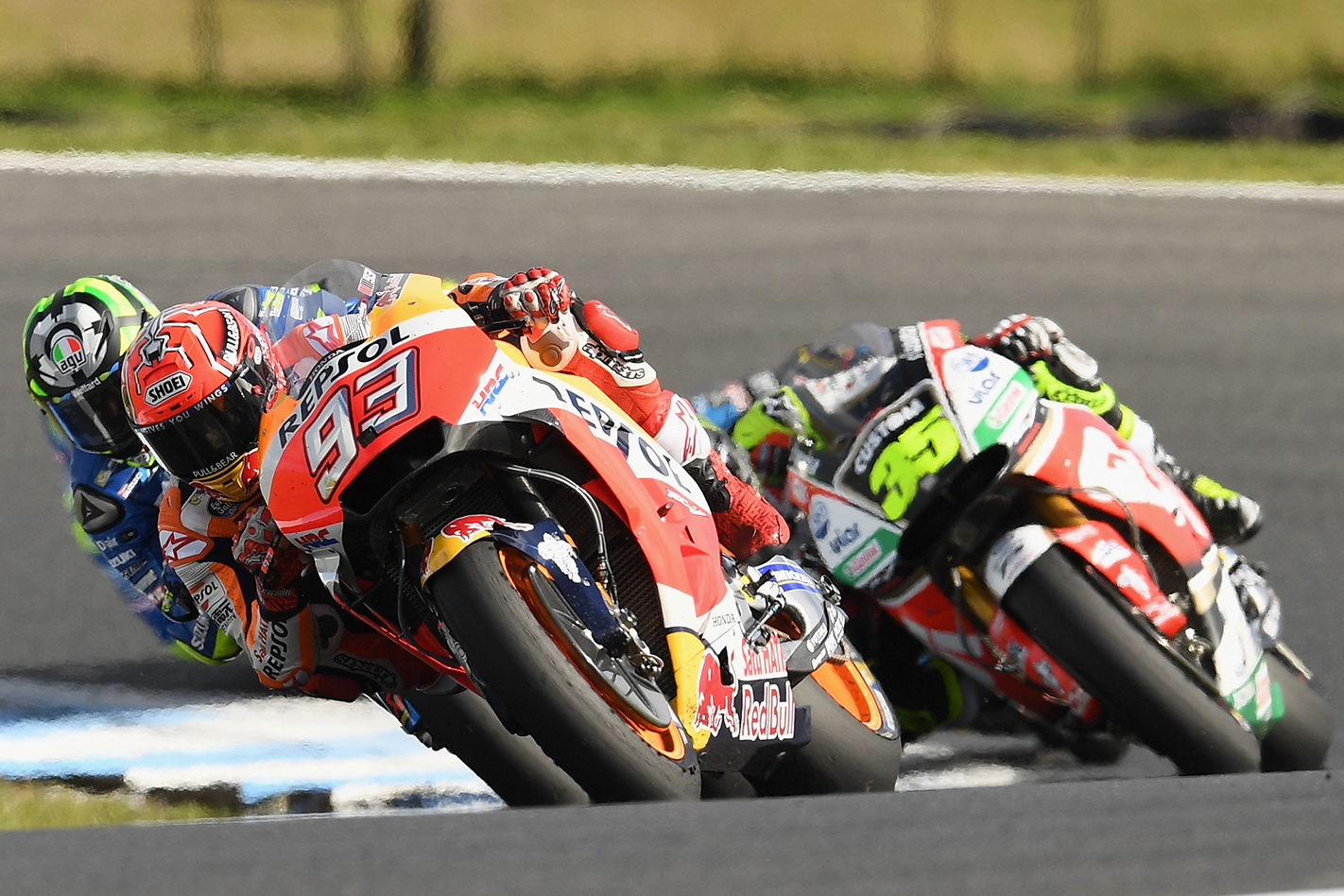
Phillip Island has hosted the MotoGP continuously since 1997 and has become one of the most celebrated stops on the global calendar, delivering significant tourism benefits. Circuit owner Andrew Fox told The Age that while he is not involved in negotiations, a motorcycle race at Albert Park would face major safety and community hurdles, including limited run-off space and potential environmental impacts.

Local leaders have also voiced concern. Bass Coast Shire mayor Rochelle Halstead said uncertainty surrounding the race has sparked strong community action, with thousands signing petitions urging the Allan government to secure the event’s future. The mayor said the MotoGP generates close to $100 million annually for the local economy and is central to the region’s identity.
Under the existing agreement, Phillip Island is scheduled to host the Australian Motorcycle Grand Prix for the final time this October, leaving the race’s long-term future in Australia increasingly uncertain.
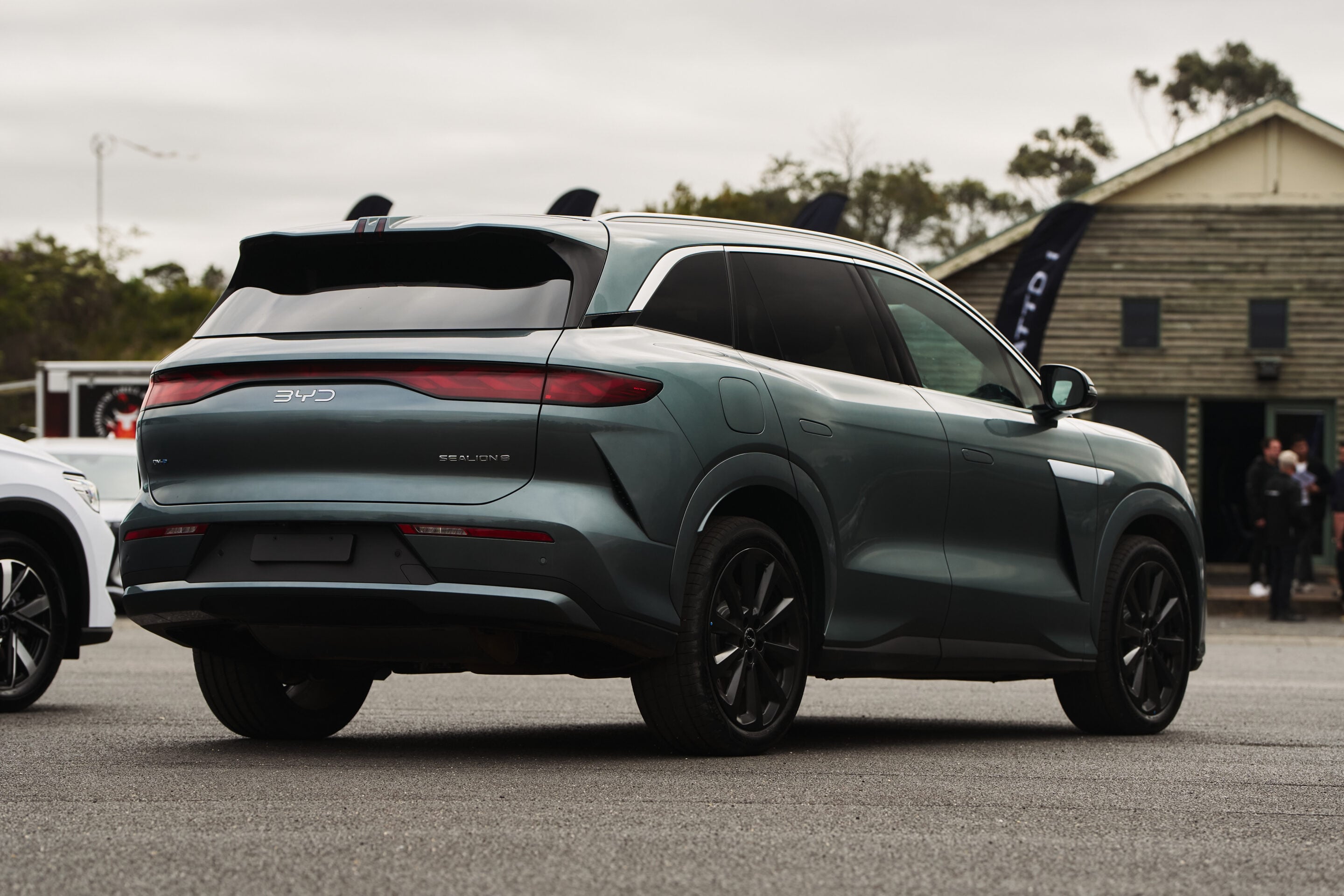
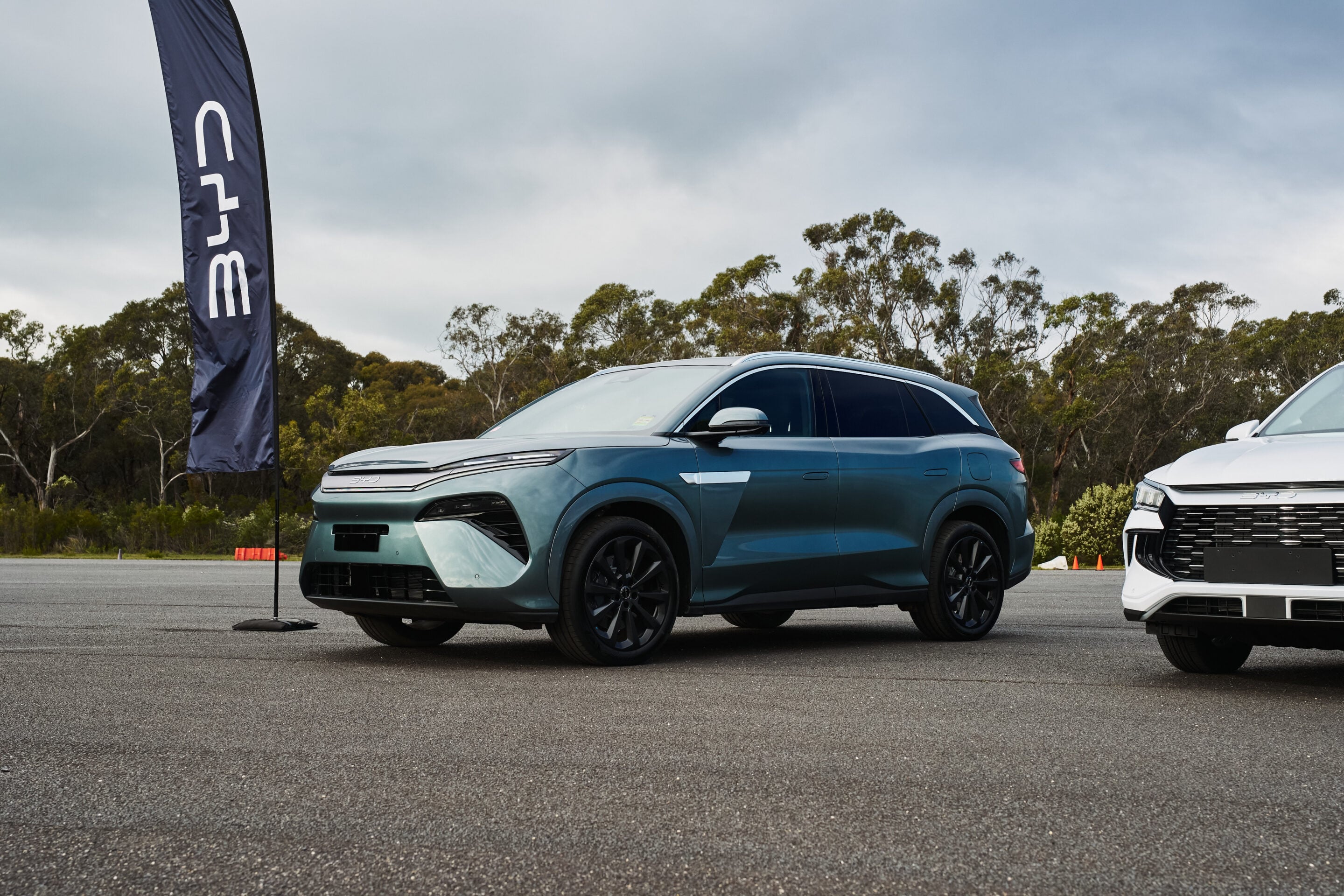
BYD has expanded its Australian SUV line-up with the introduction of the Sealion 8, the brand’s first seven-seat model for the local market and its largest plug-in hybrid vehicle to date. Priced from $56,990 before on-road costs, the Sealion 8 enters a competitive segment dominated by established family SUVs, positioning itself as a high-tech and comparatively affordable alternative.
The Sealion 8 is offered in three variants: Dynamic front-wheel drive, Dynamic all-wheel drive and Premium all-wheel drive. All versions use BYD’s latest DM 5.0 plug-in hybrid system, combining a turbocharged 1.5-litre petrol engine with an electric motor and Blade Battery technology.
In front-wheel-drive form, the Sealion 8 produces a combined 205kW and 315Nm, while the all-wheel-drive models step up significantly, delivering 359kW and 675Nm. Battery capacity varies by drivetrain, with the FWD version using a 19.0kWh battery and the AWD models featuring a larger 35.6kWh pack. BYD claims an electric-only driving range of more than 100km and combined fuel consumption as low as 1.0L/100km on the NEDC test cycle.
With three rows of seating as standard, the Sealion 8 targets growing families needing space and flexibility. Folding the second and third rows expands cargo capacity to up to 1960 litres, putting it in direct contention with vehicles such as the Toyota Kluger Hybrid, Kia Sorento PHEV and Mitsubishi Outlander PHEV. Notably, BYD’s pricing places the Sealion 8 below several of these rivals, particularly when comparing plug-in hybrid variants.
Safety features are comprehensive, with nine airbags, ISOFIX anchor points in the third row, emergency-locking seatbelts for rear passengers, seatbelt reminders for all seating positions and electronic child locks. These inclusions aim to meet the expectations of buyers shopping in the large family SUV category.
Standard equipment includes three-zone climate control, roof-mounted air vents for second and third rows, wireless Apple CarPlay and Android Auto, and multiple USB charging points throughout the cabin.
Orders for the BYD Sealion 8 are now open through the brand’s Australian dealer network, with first deliveries expected to follow shortly.
Pricing*
| SEALION 8 DM-I DYNAMIC (FWD) | $56,990 |
|---|---|
| SEALION 8 DM-P DYNAMIC (AWD) | $63,990 |
| SEALION 8 DM-P PREMIUM (AWD) | $70,990 |
*excluding on-road costs
After yesterday’s part reveal with Red Bull and Max Verstappen, we knew full details weren’t far away: the Ford Mustang Dark Horse SC has been fully unveiled.
Positioned above the regular Dark Horse but below the GTD in the lineup, the Dark Horse SC replaces the former GT500 and uses the GTD’s supercharged 5.2-litre V8 engine. Choose the optional Track Pack and you even get parts manufactured in Australia.
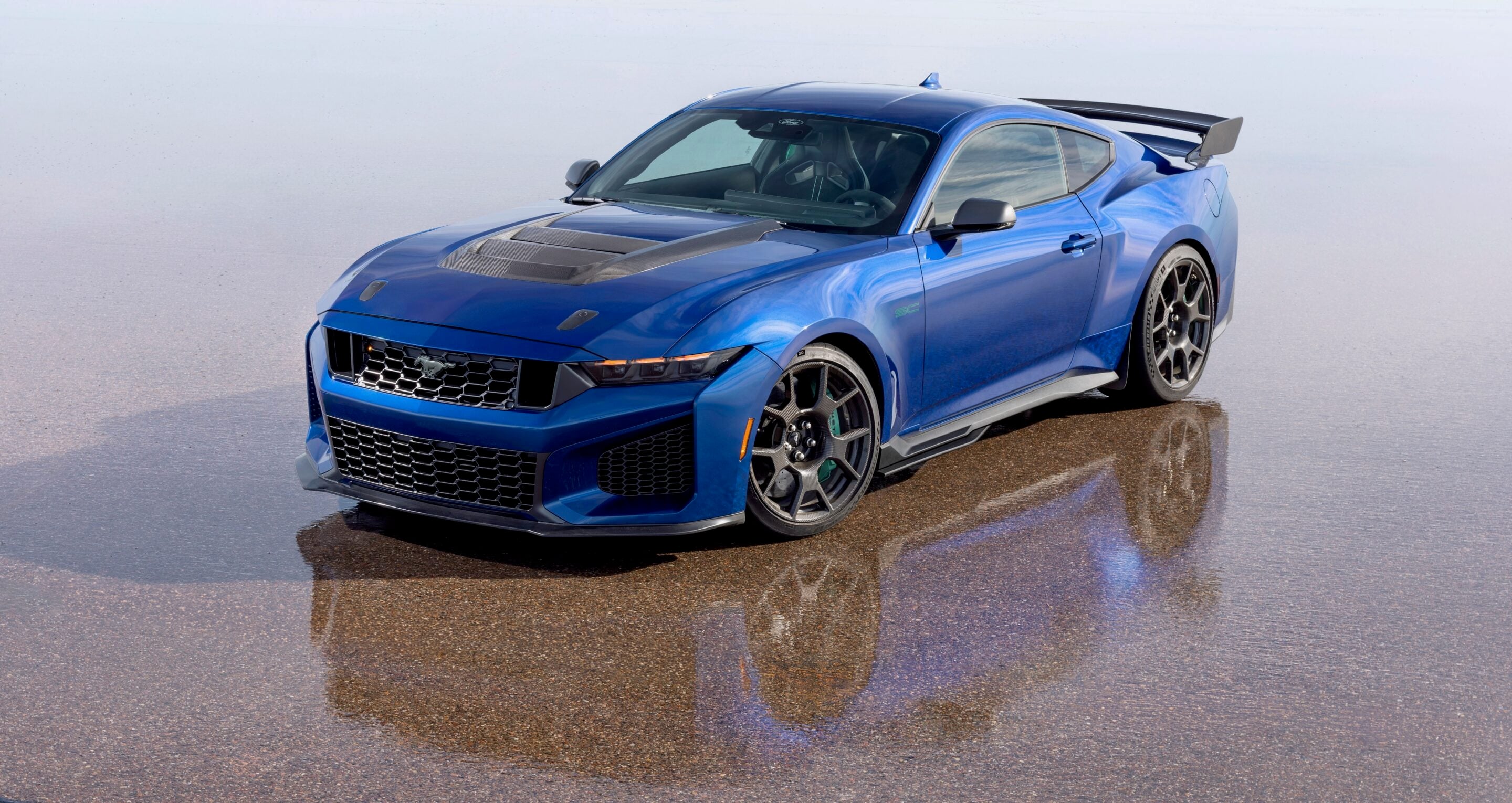
Immediately noticeable in comparison with other Mustang models is the Dark Horse SC’s much larger mouth, carbon fibre bonnet vents, wider tracks, rear diffuser, large rear spoiler and lower ride height. Inside, the SC adds more carbon fibre trim and a flat-bottomed leather and suede steering wheel.
Curiously, Ford is yet to confirm power and torque figures for the Mustang Dark Horse SC. In the GTD, the same engine produces 608kW/900Nm and the GT500 made 567kW, leading us to believe that the SC will land somewhere in between the two. Regardless, it uses a seven-speed dual-clutch transmission.
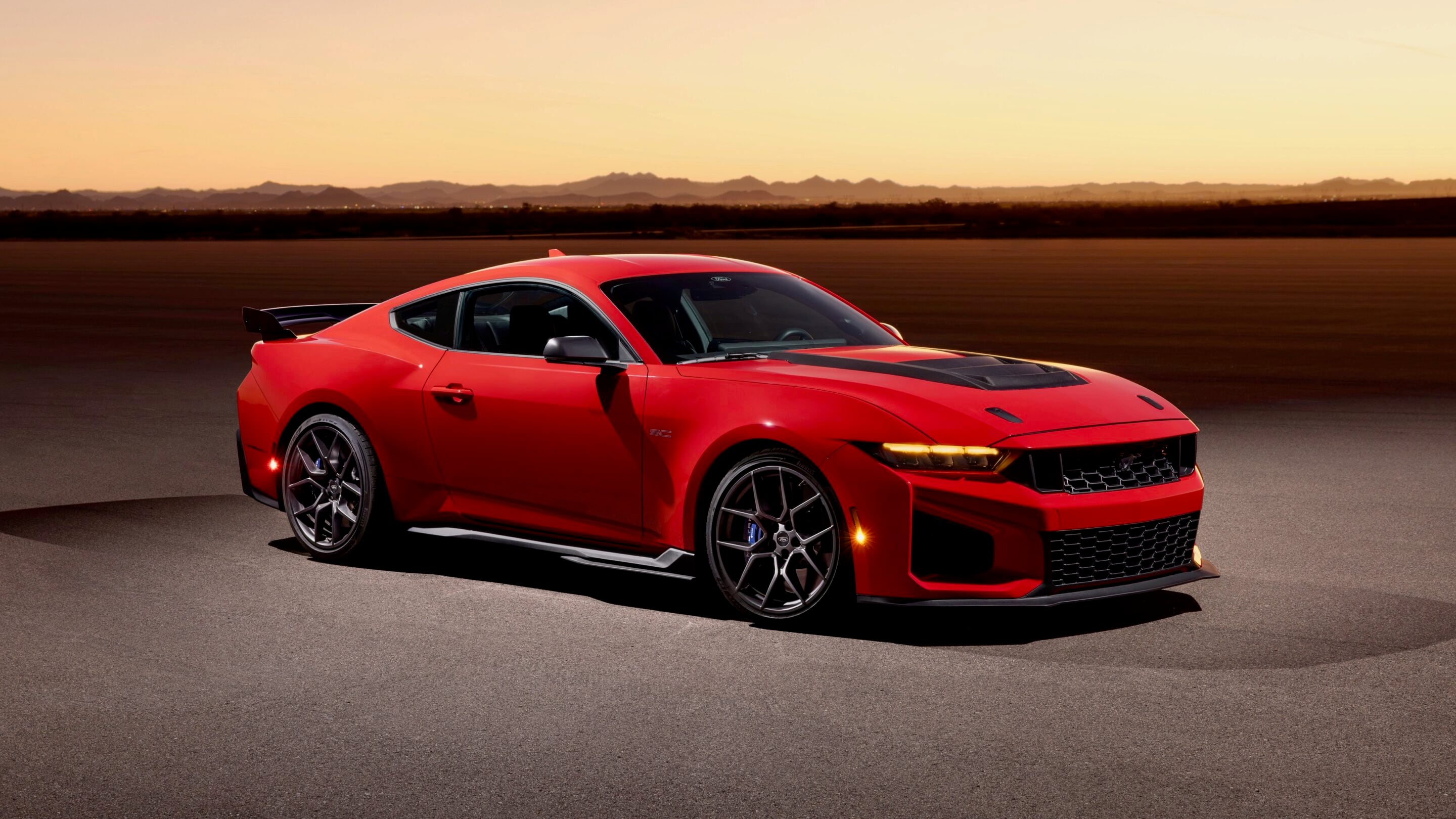
Naturally, the Mustang Dark Horse SC has also had a thorough upgrade in its ride and handling. Carbon ceramic brakes with 420mm front discs, forged suspension links, a magnesium strut brace, and next generation MagneRide dampers all feature to make it even faster around a track than a regular Dark Horse.
Optionally available for the Dark Horse SC is a Track Pack – as shown on the blue car used in the press photography – with carbon fibre wheels manufactured by a company called Carbon Revolution in Geelong, Michelin Pilot Sport Cup 2 R tyres, revised dynamics with 281kg of downforce at 290km/h, and a 68kg weight reduction thanks to the removal of the rear seats and Recaro sports seats.
The Ford Mustang Dark Horse SC will go on sale in North America later in 2026. Australian sales prospects are yet to be revealed, but we’re hopeful that it will be available here before too long.
Honda has revealed a new camper trailer concept that rethinks how lightweight design and off-grid capability can work together, particularly in an era of electric vehicles. Known as the Base Station Prototype, the compact camper has been developed by Honda’s design and research teams in the United States and is intended to pair with a wide range of vehicles, including electric SUVs.
The concept focuses heavily on modularity. Five large window sections form the core of the design and can be swapped out for solid panels or accessory modules depending on how the interior is configured. Honda’s initial concept images show options such as a built-in kitchen, external shower and air-conditioning unit, but the layout is designed to be highly adaptable, allowing owners to tailor the camper to different travel styles or trip lengths.
A pop-top roof expands the interior, creating enough standing room for adults once raised. At the rear, a large hinged panel lifts upwards to open the living space to the campsite, blurring the line between indoors and outdoors. Sleeping arrangements include a fold-out queen-size futon-style mattress, with optional upper bunks designed to accommodate children.
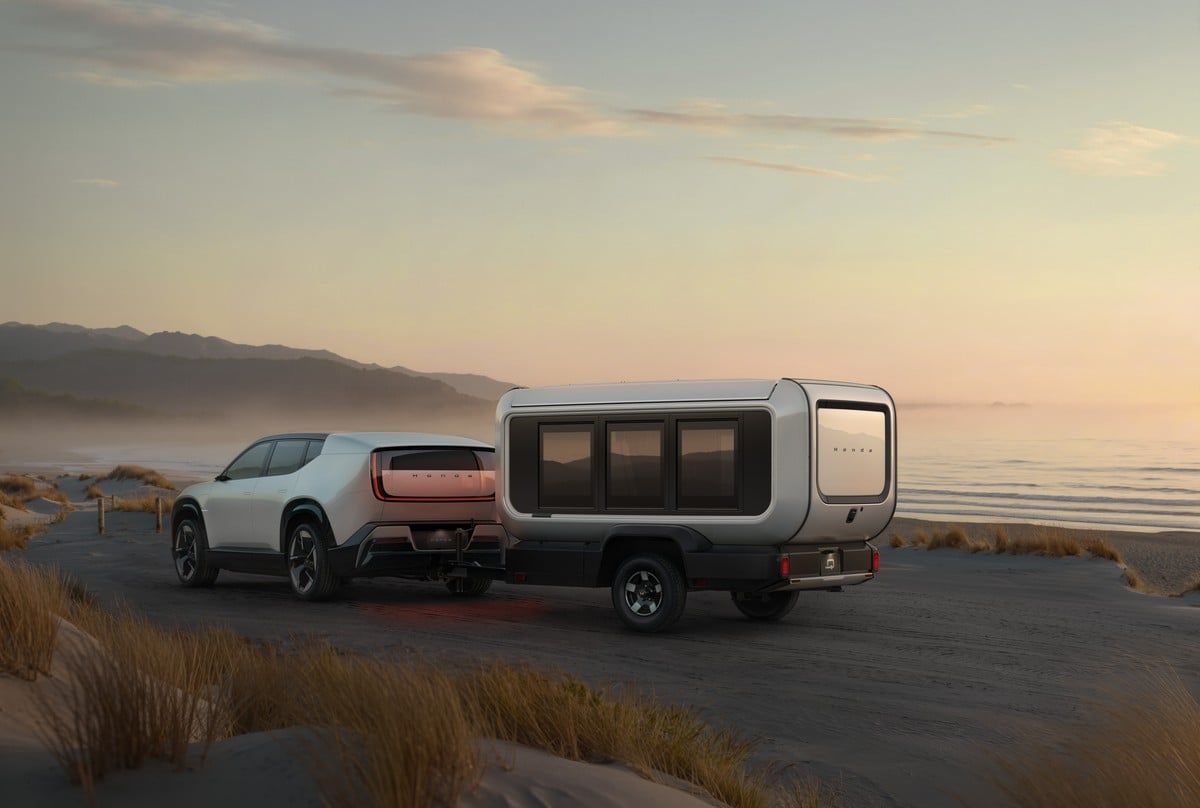
Unlike many traditional camper trailers, the Base Station Prototype is designed to operate independently of external power sources. It features its own lithium-ion battery, inverter and roof-mounted solar panels, allowing onboard systems to run off-grid. For extended stays, the system can also be supplemented with a portable Honda generator.
Visually, the camper echoes the clean, futuristic look of Honda’s upcoming electric SUVs. One distinctive feature is a series of illuminated rings around the windows, which can be adjusted for brightness and colour to provide ambient lighting around the campsite at night.
Weight reduction was a key development goal. By keeping mass to a minimum, Honda aims to make the trailer towable by a broad range of vehicles, from petrol and hybrid SUVs like the CR-V to fully electric models, where reduced weight helps minimise driving range loss.
While Honda has no current plans to put the Base Station Prototype into production, the concept offers insight into how the brand sees future recreational travel aligning with its next generation of electric vehicles.
Subaru Australia has announced a new special edition of the BRZ sports coupe called the Kiiro, which sits atop the 2026 BRZ range. The Japanese word for “yellow”, just 95 units of the Subaru BRZ tS Kiiro Limited Edition will be offered in Australia and pricing starts at $53,590 plus on-road costs (or $800 more than the tS on which it’s based).
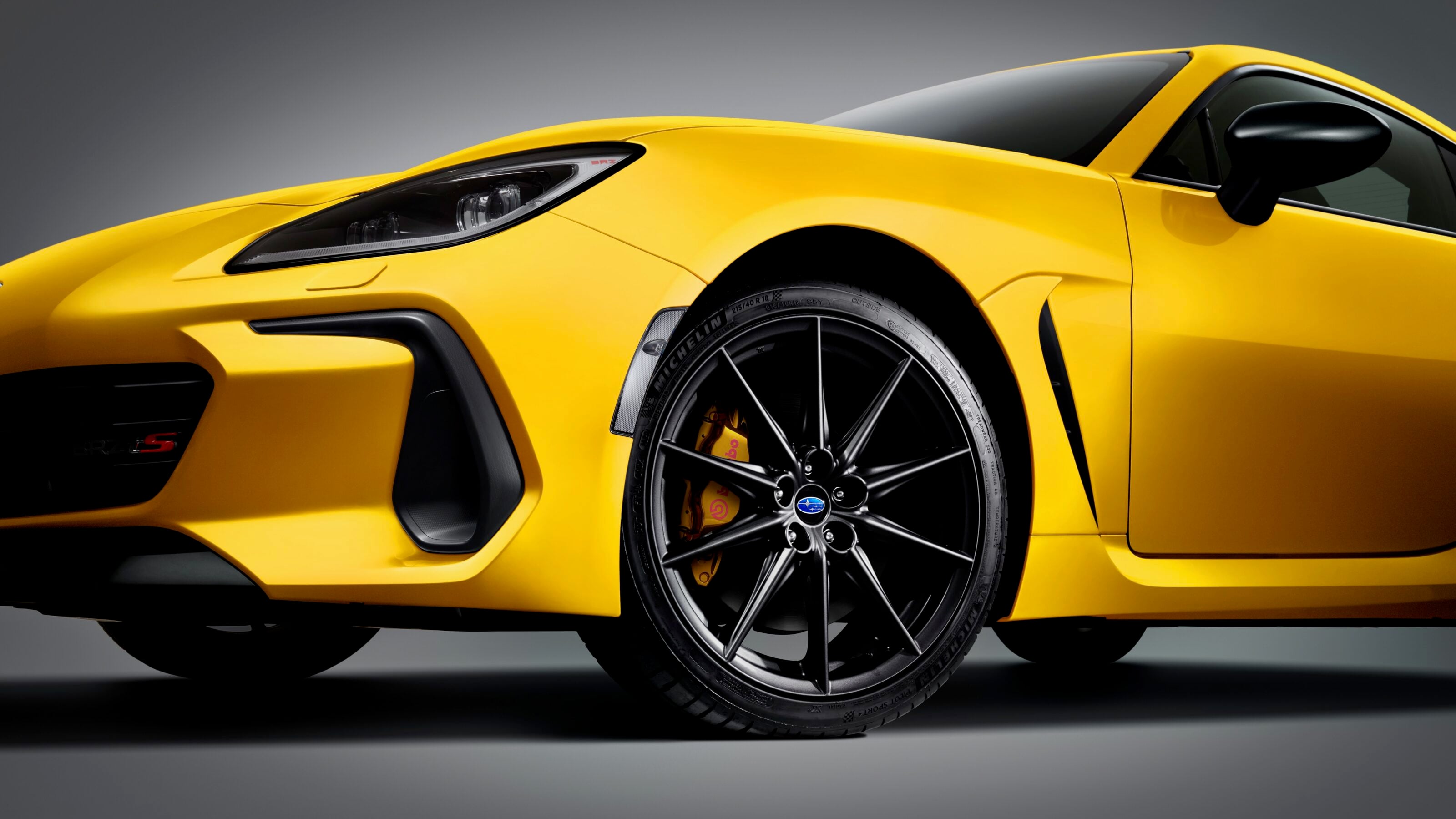
Above the tS, the Kiiro adds an exclusive ‘Sunrise Yellow’ exterior paint colour, 18-inch matte black alloy wheels, suede and leather seat upholstery with yellow perforation, yellow stitching on the steering wheel and gear shift boot, an interior Kiiro badge with a limited edition number and a rear matte black ‘Kiiro’ badge.
That’s on top of features in the regular BRZ tS such as automatic LED lighting, Brembo brakes, STI suspension, keyless entry with push button start, dual-zone automatic climate control, an 8.0-inch touchscreen, sat-nav, Apple CarPlay and Android Auto, heated front seats and safety features including automatic emergency braking, lane departure warning, adaptive cruise control, blind-spot monitoring, rear cross-traffic alert, auto high beam and a reversing camera.
2026 Subaru BRZ pricing (plus on-road costs):
| Manual | $47,890 |
|---|---|
| Automatic | $47,890 |
| S manual | $49,190 |
| S automatic | $49,190 |
| tS manual | $52,790 |
| tS automatic | $52,790 |
| tS Kiiro manual | $53,590 |
| tS Kiiro automatic | $53,590 |
The new BRZ tS Kiiro Limited Edition, along with the full 2026 Subaru BRZ range, is available to order now through Subaru Retailers nationwide.
Alfa Romeo has launched a new limited edition version of its Giulia Quadrifoglio super sedan called the Estrema, or “extreme” in Italian. Limited to just 19 units in Australia, the Giulia Quadrifoglio Estrema adds a host of special design elements to separate it from lesser Giulia models, including carbon fibre exterior trimmings on the mirror caps and grille, black brake callipers and an Akrapovič titanium exhaust.
The Giulia Quadrifoglio Estrema is priced from $186,990 plus on-road costs, or $30,000 more than the regular Giulia Quadrifoglio on which it’s based.
For enthusiasts, the tastiest feature of the Estrema is the Akrapovič titanium exhaust system with carbon fibre finishers, which not only sounds even better but also makes more grunt at 382kW/606Nm (up from 375kW/600Nm).
In addition to the new exhaust system, the Estrema also adds a number of carbon-fibre trims, including on the door mirror caps, front grille and illuminated doorsills.
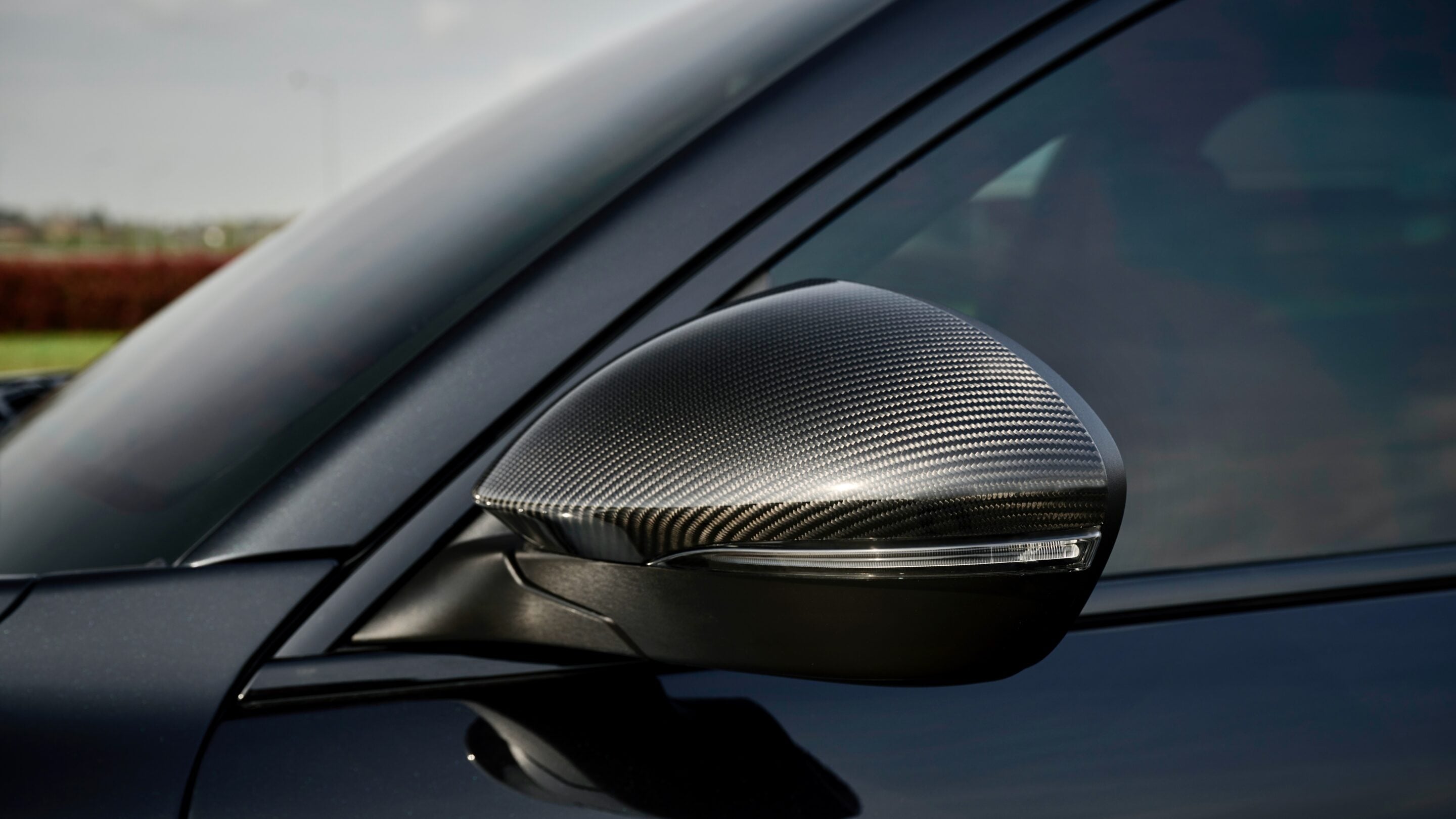
Black brake callipers and rear badging also feature, as well as red key covers, door projector lights, a commemorative build plate, certificate of authenticity and even a 33 Stradale customer book.
The Estrema is available in ‘Vulcano Black’, ‘Etna Red’ or ‘Montreal Green’ colouring for no extra charge, Customers can also add carbon-ceramic brakes for $15,950, as well as Sparco leather/suede bucket seats with carbon-fibre backing for $8350.
Alfa Romeo Giulia Quadrifoglio Estrema design enhancements:
- Akrapovič titanium exhaust system with carbon-fibre finishers
- Carbon-fibre door mirror caps
- Carbon-fibre Scudetto front grille
- Carbon-fibre illuminated door sills
- Black Giulia rear badge
- Black Brembo brake calipers
- Alfa Romeo monochrome badging
- Alfa Romeo red key covers
- Alfa Romeo door projector lights
- Special paint
- Commemorative build plate
- Certificate of authenticity
- Customer gift (33 Stradale book)
The Alfa Romeo Giulia Quadrifoglio Estrema is now available to order ahead of the first deliveries landing in February.
